


AI Summarize


Share


If you're a Privacy Officer or compliance lead at a growing business with a global reach, there are a number of drawbacks to a one-size-fits-all Privacy Policy. Customers, regulators, and even app stores expect clear, region-specific disclosures that match the data protection rights of local users.
Failing to do so creates risk. At best, you face customer complaints and app rejection notices. At worst, you're looking at hefty fines under laws like the EU's General Data Protection Regulation (GDPR), California's Consumer Privacy Act (CCPA/CPRA), or Canada's Personal Information Protection and Electronic Documents Act (PIPEDA).
Therefore, creating and maintaining a single, global Privacy Policy is unlikely to be the best solution for privacy officers at smaller businesses. Instead, this guide explains the value of building Privacy Policies tailored to specific regions and how to structure them so it's clear to both users and regulators exactly which rights apply to them.
Region-specific does not mean every single country must have its own privacy notice. For most organizations, the focus should be on the major regimes that create the highest risk (typically the GDPR/UK GDPR, U.S. state privacy laws starting with CCPA/CPRA and Canada's PIPEDA and Québec's Law 25. Additional modules can be phased in as user bases grow in other jurisdictions such as Brazil (LGPD) or Australia. This risk-based prioritization helps businesses remain compliant without becoming overwhelmed.
Our Privacy Policy Generator makes it easy to create a Privacy Policy for your business. Just follow these steps:
-
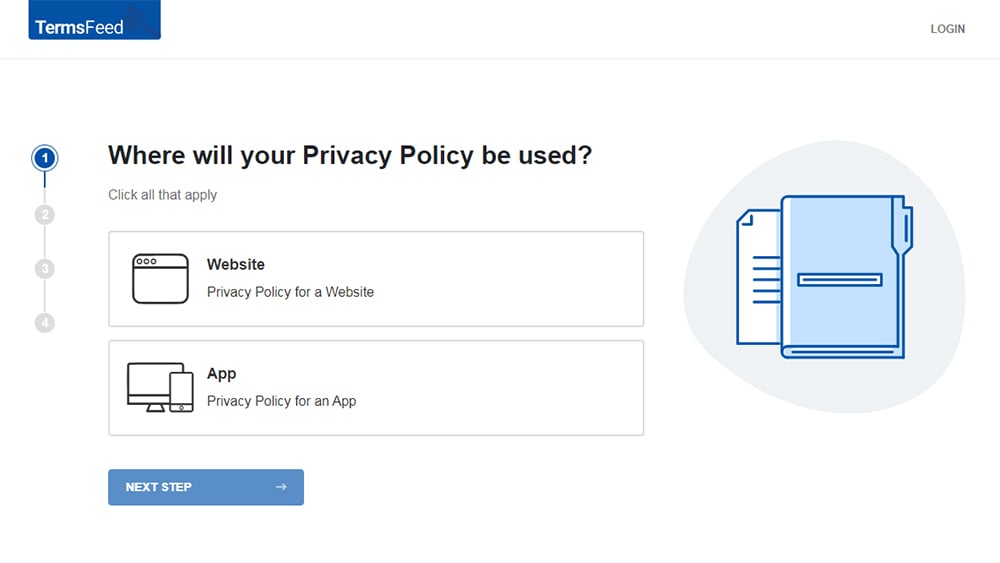
At Step 1, select the Website option or App option or both.
-
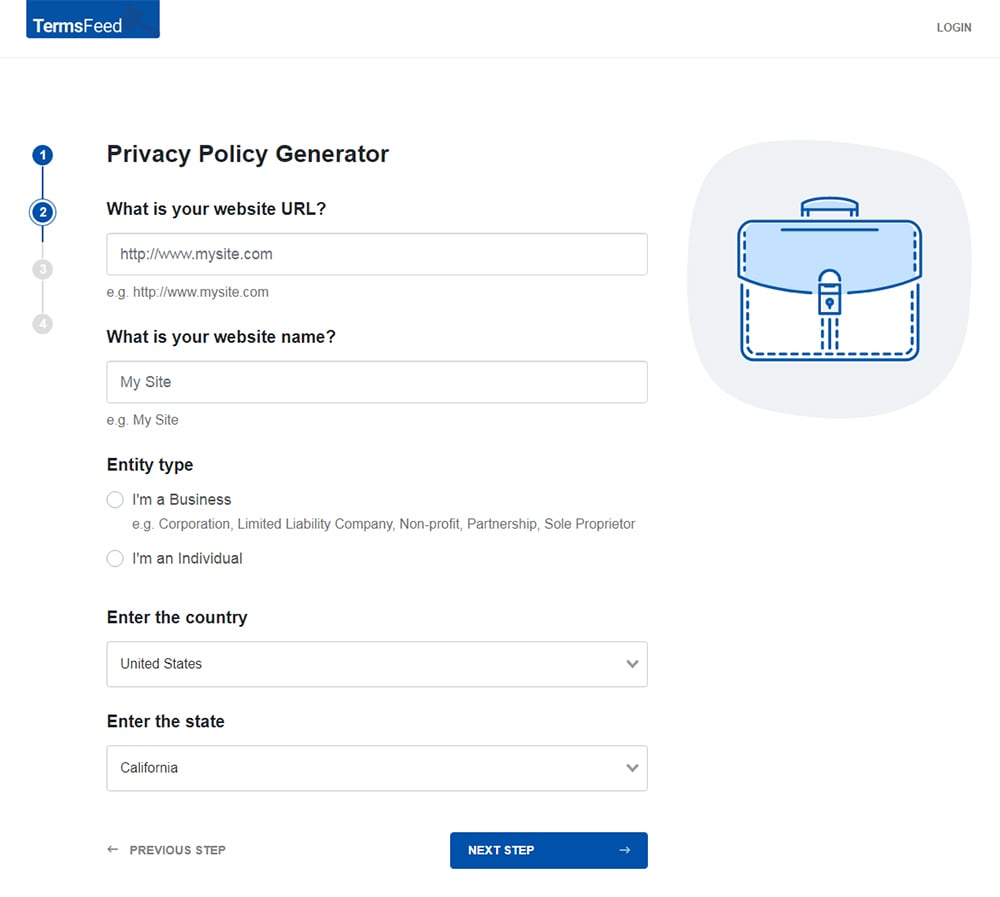
Answer some questions about your website or app.
-
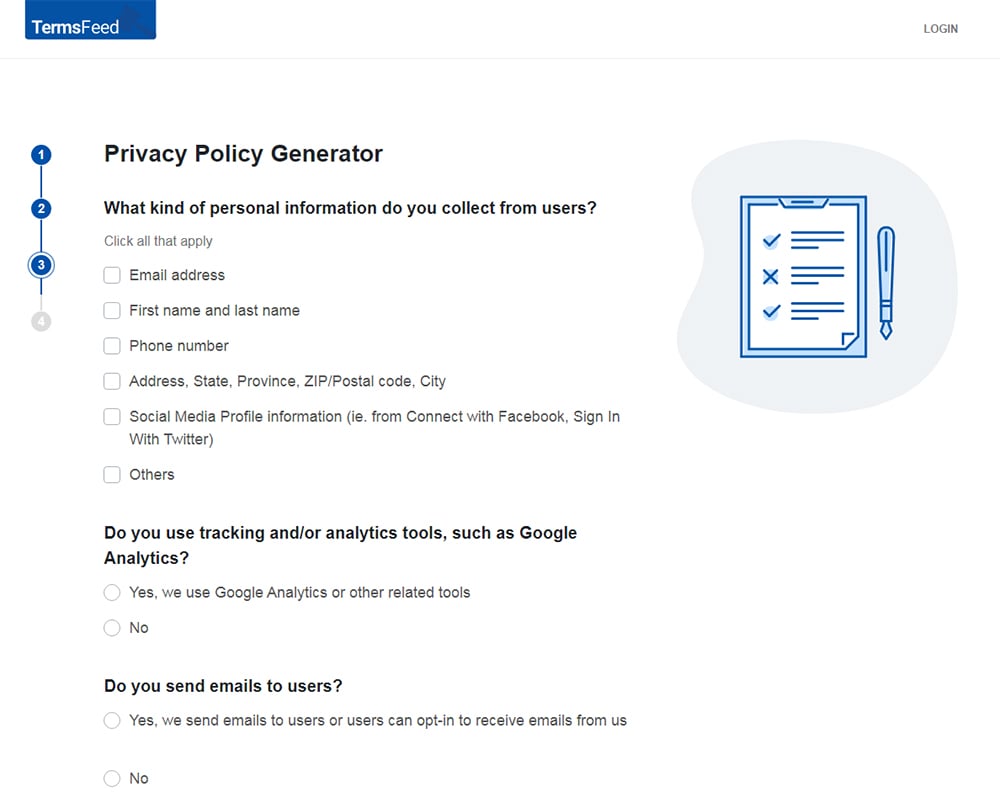
Answer some questions about your business.
-
Enter the email address where you'd like the Privacy Policy delivered and click "Generate."
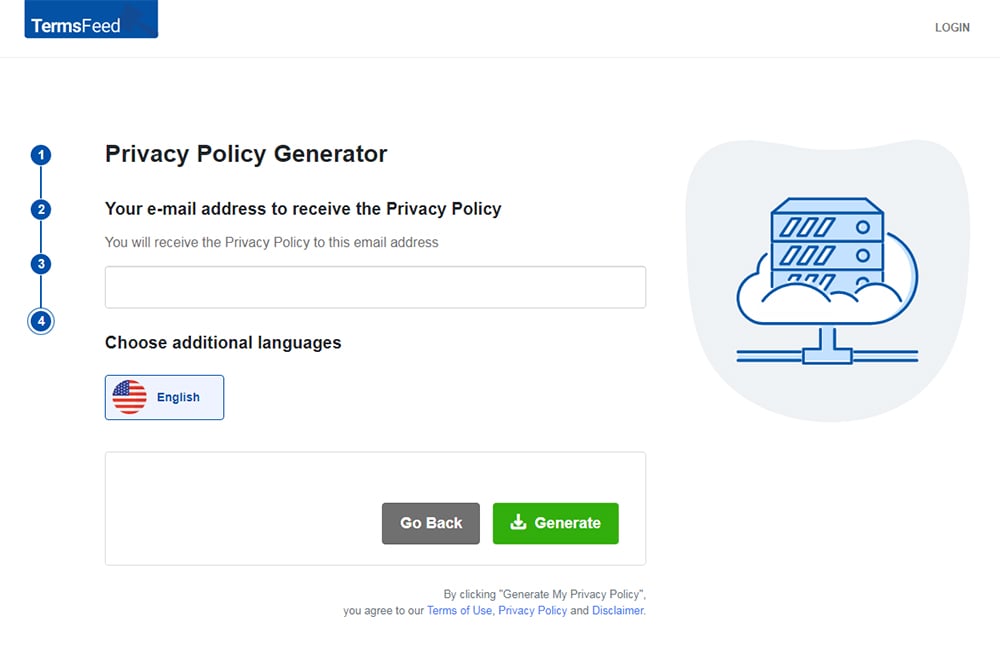
You'll be able to instantly access and download your new Privacy Policy.


- 1. Why Region-Specific Privacy Policies Matter
- 2. Guiding Principle: General Disclosures and Region-Specific Rights
- 3. Step 1: Build a Global Core
- 4. Step 2: Plug In Region-Specific Rights Sections
- 4.1. GDPR (EU/UK) Users
- 4.2. California (CCPA/CPRA) Users
- 4.3. Canadian (PIPEDA) Users
- 4.4. Other Regions (e.g., Brazil's LGPD, Australia, U.S. state laws)
- 5. Step 3: Layer the Notice
- 6. Step 4: Use Plain Language for Rights
- 7. Step 5: Provide Clear Contact Points
- 8. Step 6: Keep It Updated and Dated
- 9. Step 7: Train Your Staff on Regional Differences
- 10. Step 8: Monitor Complaints and Enforcement
- 10.1. Learn from enforcement actions
- 11. Summary
Why Region-Specific Privacy Policies Matter
A global Privacy Policy might seem like a great way to ensure consistency across every country in which your business operates. However, with data privacy laws constantly changing and specific cultural requirements to consider, the safest route for most privacy officers is to build and monitor region-specific privacy policies that keep your business on safe ground wherever its customers reside.
Some differences between jurisdictions include:
- What data counts as personal data (any information that identifies or can identify an individual).
- What rights individuals have over their data (access, deletion, portability, correction).
- What disclosures companies must provide in Privacy Policies.
Here's what this looks like at the region-specific level:
- GDPR (EU GDPR / UK GDPR): Broad definition of personal data, with explicit rights to access, rectify, erase, restrict, and port data. Hefty fines up to €20 million or 4% of global turnover for violations.
- CCPA/CPRA (California): Strong consumer rights to opt out of selling or sharing data, plus disclosure obligations for businesses making over $25M annually or meeting data thresholds.
- PIPEDA (Canada): Consent-driven model, requiring organizations to get meaningful consent before collection, use, or disclosure of personal information.
Trying to lump all of these requirements together into one generic Privacy Policy may be possible, but it could quickly become unwieldy and difficult to maintain. Plus, it could create two key problems:
- Legal risk: Missing required disclosures means non-compliance.
- User confusion: Readers won't know which rights apply to them. This confusion could lead to complaints to regulators, which take time and money to follow up.
It's also important to recognize that definitions are not identical across laws. For example, GDPR treats IP addresses and cookie identifiers as personal data, while some U.S. state laws distinguish between "personal information" and "sensitive personal information."
Likewise, PIPEDA allows implied consent in some contexts, whereas GDPR requires a valid legal basis such as legitimate interest or explicit consent. These nuances mean that a global ‘catch-all' definition may create contradictions or over-promising language.
Guiding Principle: General Disclosures and Region-Specific Rights
Creating a region-specific Privacy Policy for every jurisdiction with which you do business could sound overwhelming. For most businesses, the best way to keep it simple, manageable, and easy to review is to clearly structure their Privacy Policy with general disclosures, followed by region-specific rights.
This layered approach gives you a clean foundation: everyone sees the same core rules about what data you collect, how you use it, and how you keep it secure. Then, users from the EU, California, Canada, or elsewhere can quickly find the rights that apply specifically to them. By separating universal information from jurisdiction-specific obligations, you minimize confusion, hopefully avoid complaints, and set up a framework you can expand as new privacy laws emerge.
Step 1: Build a Global Core
Every Privacy Policy should begin with information that applies to all users, everywhere. This "global core" covers:
- What data you collect (names, emails, payment info, IP addresses, cookies).
- How you collect it (forms, cookies, apps, third-party integrations).
- Why you use it (service delivery, analytics, marketing, fraud prevention).
- How you secure it (encryption, access controls).
- How long you keep it (retention schedules or criteria).
This section acts as the foundation. It shows transparency and avoids repeating basic explanations in every regional section.
At this stage, organizations should also describe whether and how they transfer data across borders. Many regulators, particularly in the EU, require clear disclosures about international transfers and the safeguards applied (e.g. Standard Contractual Clauses, adequacy decisions, Binding Corporate Rules). Failing to mention transfer mechanisms is one of the most common deficiencies regulators highlight in privacy policy audits.
As shown in Microsoft's Privacy Statement below, the global context is set at the outset. Then, individuals from the US are directed to a separate US State Data Privacy Notice.

Step 2: Plug In Region-Specific Rights Sections
Next, create clearly labeled sections for each jurisdiction where you have significant users. Let's look at a few examples.
GDPR (EU/UK) Users
- Legal bases for processing (consent, contract, legitimate interest, legal obligation).
- Right of access, rectification, erasure ("right to be forgotten"), restriction, and portability.
- Right to complain to a supervisory authority under Article 77.
Note that rights under the GDPR are not absolute. For example, the right to erasure does not apply where data must be retained for legal obligations, and the right to portability only covers data "provided" by the user. A brief caveat like this in your policy helps set user expectations and avoids creating rights that exceed legal requirements.
California (CCPA/CPRA) Users
- Categories of personal information collected.
- Explanation of "selling" and "sharing" data.
- How to use a "Do Not Sell or Share My Personal Information" link.
- Rights to know, delete, and opt out.
- Description of financial incentives if you offer loyalty programs.
The CPRA amendments introduced in 2023 expanded obligations. Businesses must now explain the use of "sensitive personal information" and provide users the right to limit its use. They must also disclose whether automated decision-making is used and conduct risk assessments in certain cases. Any California module should reflect these expanded rights.
Canadian (PIPEDA) Users
- Explanation of consent (express or implied).
- Right to withdraw consent.
- How to file a complaint with the Office of the Privacy Commissioner of Canada
Keep in mind that Canada's privacy landscape is evolving. Québec's Law 25 introduced GDPR-style rights such as data portability and stricter consent standards. PIPEDA is also expected to be modernized. Businesses active in Canada should monitor these developments and be ready to update their modules accordingly.
Other Regions (e.g., Brazil's LGPD, Australia, U.S. state laws)
Add modular sections as needed. Each should be titled with the relevant law and location so users can immediately determine if it applies to them.
The example below from Apple.com shows how it tackles localization. The two specific links highlighted below within its worldwide Privacy Policy allow users from California and Canada to quickly locate their rights under legislation that applies in their jurisdiction.

Walgreens' Privacy & Security Policy includes links to sections for residents of other states that have enacted privacy laws. Crucially, these links are embedded in the opening paragraph of its policy, providing transparency from the outset.

Step 3: Layer the Notice
A long, dense Privacy Policy is a red flag for regulators. They typically require that they be easily accessible. After all, the goal is that people read them, not drown in endless pages of small print.
The GDPR and the UK ICO (shown below) recommend layered privacy notices. For region-specific Privacy Policies, this means:
- Top-level summary: Short explanations with links.
- Detailed regional sections: Full disclosures for those who need them.
This approach avoids overwhelming users while still meeting legal obligations:

Regulators also emphasize that layered notices must not hide key rights. For example, the European Data Protection Board warns that essential disclosures (such as lawful bases for processing or user opt-out rights) must be visible in the first layer or clearly flagged, rather than buried in deep links.
Step 4: Use Plain Language for Rights
Data privacy laws require that Privacy Policies be easy to understand without legal training. This is the principle of transparency, as demonstrated below in Recital 39 from the GDPR, which requires "clear and plain language."

For example:
- Instead of: "Data subjects may exercise their right to data portability under Article 20 of the GDPR."
- Your Privacy Policy could say: "You can ask us to give you a copy of your information in a format you can take to another service."
To test clarity, many organizations run readability checks (e.g. Flesch-Kincaid scores) or user testing with non-lawyers. This helps confirm that policies meet transparency obligations in practice. At the same time, avoid "oversimplifying" to the point of legal inaccuracy: some organizations use short plain-language summaries alongside formal legal wording to strike the right balance.
Step 5: Provide Clear Contact Points
It's not enough to describe privacy rights - you must also make it easy for people to use them. Each regional section of your Privacy Policy should clearly explain both what rights users have and how they can exercise them. This prevents confusion and reduces the risk of complaints to regulators.
Some examples include:
- GDPR (EU/UK): List rights to access, rectification, erasure, restriction, and portability. Then provide an email address or web form for Data Subject Access Requests (DSARs), plus contact details for your EU/UK representative if you don't have a local office (GDPR Article 27)
- California (CCPA/CPRA): Outline rights to know, delete, and opt out of the sale or sharing of personal information. Provide a toll-free phone number and an online request form as required under the law.
- Canada (PIPEDA): Explain how users can withdraw consent and how to contact your Privacy Officer. Also include information on how to escalate complaints to the Office of the Privacy Commissioner of Canada.
By combining the rights and the contact points into each regional section, you show users exactly what applies to them and how to act on it, without forcing them to hunt through the policy.
International clothing retailer Gap provides US, UK, and EEA email addresses and physical addresses as part of its generic Privacy Policy. However, for California residents, it goes a step further. As shown below, it outlines specific requests California residents are entitled to make and how they can exercise those rights.

Policies should also disclose how identity verification works. Under CCPA/CPRA, businesses cannot impose unreasonable burdens (such as requiring a government ID for every request). Similarly, GDPR requires controllers to verify identity "by reasonable means" but without excessive collection of new personal data. Explaining verification steps in advance helps build trust and reduces disputes.
Step 6: Keep It Updated and Dated
Every region expects up-to-date Privacy Policies. Always include:
- "Last updated" date at the top.
- Updates when laws change (e.g., CPRA amendments in 2023, Québec's Law 25 in Canada).
- Schedule regular reviews every 6–12 months.
Let's draw a few lessons from Nike's Privacy Policy. It includes a section on changes, which clearly states when it was last updated. It also manages users' expectations around future changes. It explains how updates will be communicated and that changes to data processing will be communicated in line with relevant legal requirements.

Where laws require proactive notice of changes, businesses should explain how updates will be communicated (e.g. email notice, website banner). Some regulators also encourage publishing prior versions or a version history so users can see how policies evolve over time.
Step 7: Train Your Staff on Regional Differences
Even with a perfect Privacy Policy, complaints arise if customer-facing staff don't know how to handle region-specific rights.
Don't wait until real-world requests come in to train your staff. Regulators can and do perform checks to see if rights are honored in practice.
As shown below, California Attorney General Rob Bonta has conducted investigative sweeps of mobile applications to check that these businesses are complying with customer opt-out requests. This followed the high-profile case of Sephora, which was found to have violated the CCPA in its handling of opt-out requests.

Therefore, to ensure compliance, privacy officers need to ensure frontline staff are trained on the following:
- Response deadlines (one month, extendable by up to two months, under the GDPR, 45 days under CCPA).
- Identity verification procedures.
- Escalation paths for legal review.
Some organizations go further and conduct "mystery shopper" or internal audit exercises: submitting test requests to confirm staff handle them correctly. Regulators in both the EU and California have confirmed that they may check actual responsiveness to rights requests, not just the wording of the policy.
Step 8: Monitor Complaints and Enforcement
A common mistake is writing a compliant Privacy Policy but ignoring how users react to it. It's important to track complaints and questions and look for patterns. Are users confused by the structure? Is your Privacy Policy so heavily layered that it's difficult to find the section that applies to them?
Learn from enforcement actions
It's a good idea for privacy officers to keep up to date with published enforcement actions to see how regulators interpret requirements in different jurisdictions.
For example, the Sephora CCPA settlement illustrates why Privacy Officers must align their written policies with actual practices.
Sephora was penalized not only for failing to honor opt-out requests but also for publishing a Privacy Policy that did not clearly disclose its data sales or explain how California residents could exercise their rights. The hefty fine could likely have been avoided with plain-language disclosures about data-sharing practices and fully functional opt-out tools.
For Privacy Officers, the takeaway is clear: ensure your localized Privacy Policies spell out required rights in detail and back them up with working request mechanisms that regulators can test.

Other recent enforcement actions, such as state attorney general investigations into tracking technologies and notice failures in Colorado and Connecticut, confirm that privacy notices are among the first documents regulators review. Privacy officers should keep a log of relevant cases and compare their own policies against enforcement trends at least annually.
Summary
The ultimate goal of a Privacy Officer is not simply to publish a legally compliant notice, but to structure it in a way that makes sense to real users. A strong Privacy Policy begins with general disclosures that apply to everyone - what data is collected, why it is used, and how it is protected. From there, region-specific sections outline rights under the GDPR, CCPA, PIPEDA, or other applicable laws, ensuring that users in each jurisdiction are aware of the specific regulations that apply to them.
This layered approach solves two problems at once: it ensures regulators see all mandatory disclosures, and it prevents users from lodging complaints because they cannot understand or locate their rights. By using plain language, clear headings, and accessible contact methods, you transform your Privacy Policy into a practical tool rather than a dense legal wall of text.
For Privacy Officers, the action step is simple: design policies with a core-and-modules structure, update them regularly, and confirm that every right listed can actually be exercised. Then, regularly monitor and update your Privacy Policies as legislation changes and train your staff to remain compliant. This strategy creates clarity, avoids confusion, and positions your company as trustworthy and compliant across every region where you operate.
Finally, remember that a Privacy Policy is more than a compliance document: it can also be treated as a binding commitment in consumer protection or class-action litigation. Over-promising ("we never share your data") can create liability if business practices differ. Draft region-specific modules carefully to ensure promises are both accurate and sustainable.

The first step to compliance: A Privacy Policy.
Stay compliant with our agreements, policies, and consent banners — everything you need, all in one place.


