


AI Summarize


Share


Remote work has fundamentally changed how companies worldwide manage their teams. A 2025 ExpressVPN survey found that 73% of US-based employers now use online monitoring tools.
This shift raises both legal and ethical questions. Employers want visibility into how employees spend their work time. Employees expect privacy and transparency. The big question is: how do you keep people accountable without crossing the line?
There's no simple answer. Monitoring remote workers involves navigating a complex web of laws, industry norms, and ethical concerns, all of which can vary depending on where your employees reside.
This article provides a deep dive into the legal and ethical implications of employee monitoring in today's remote work environment.
Our Privacy Policy Generator makes it easy to create a Privacy Policy for your business. Just follow these steps:
-
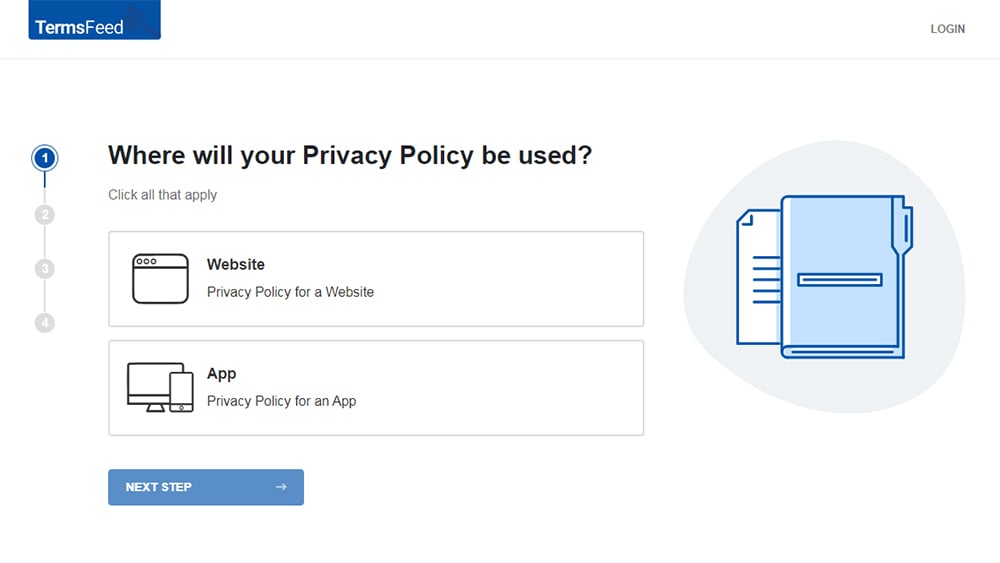
At Step 1, select the Website option or App option or both.
-
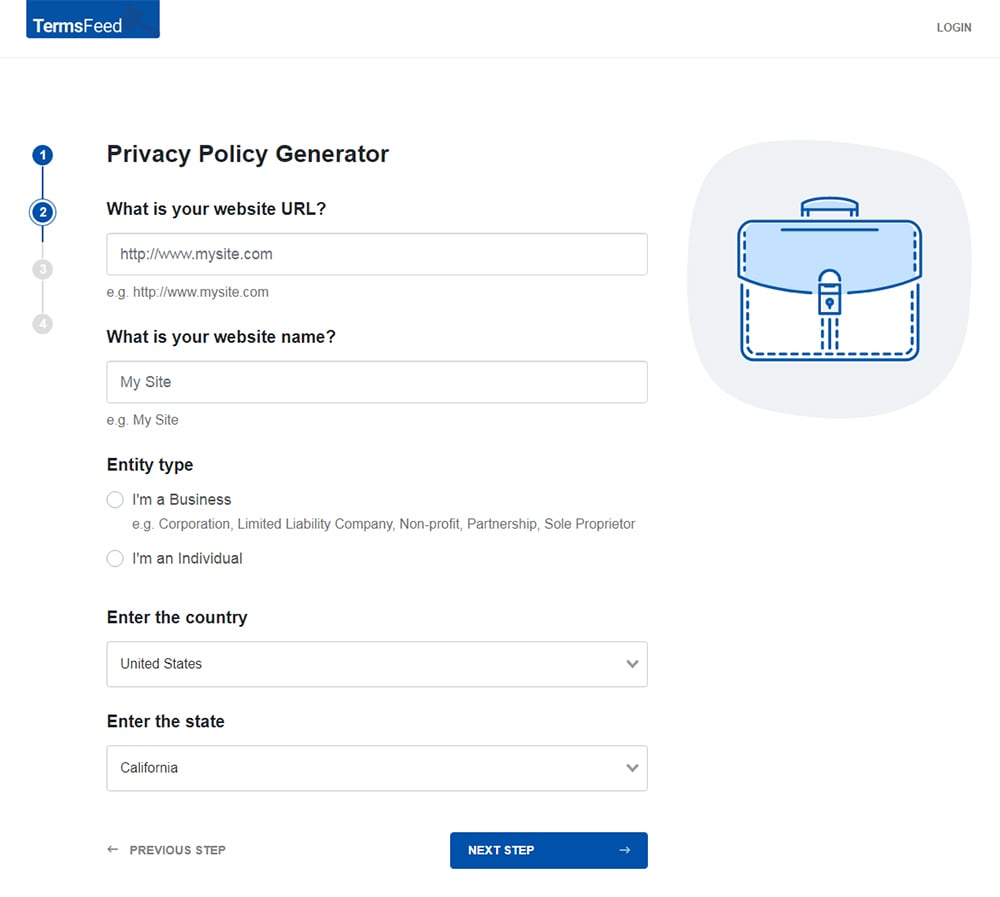
Answer some questions about your website or app.
-
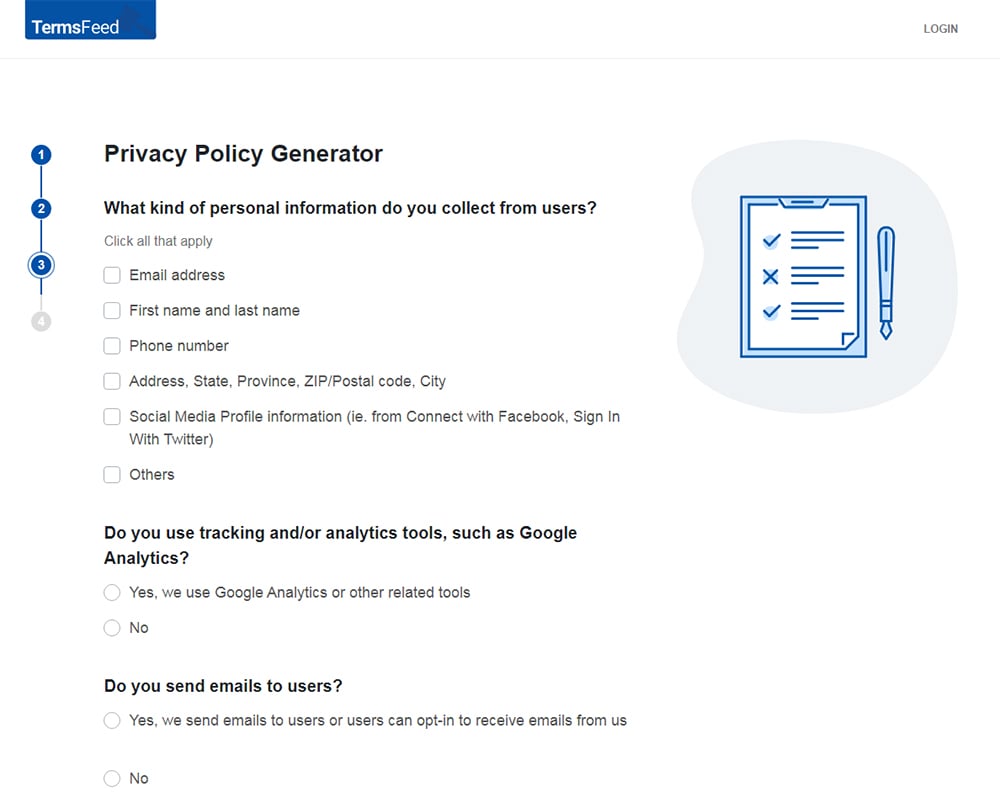
Answer some questions about your business.
-
Enter the email address where you'd like the Privacy Policy delivered and click "Generate."
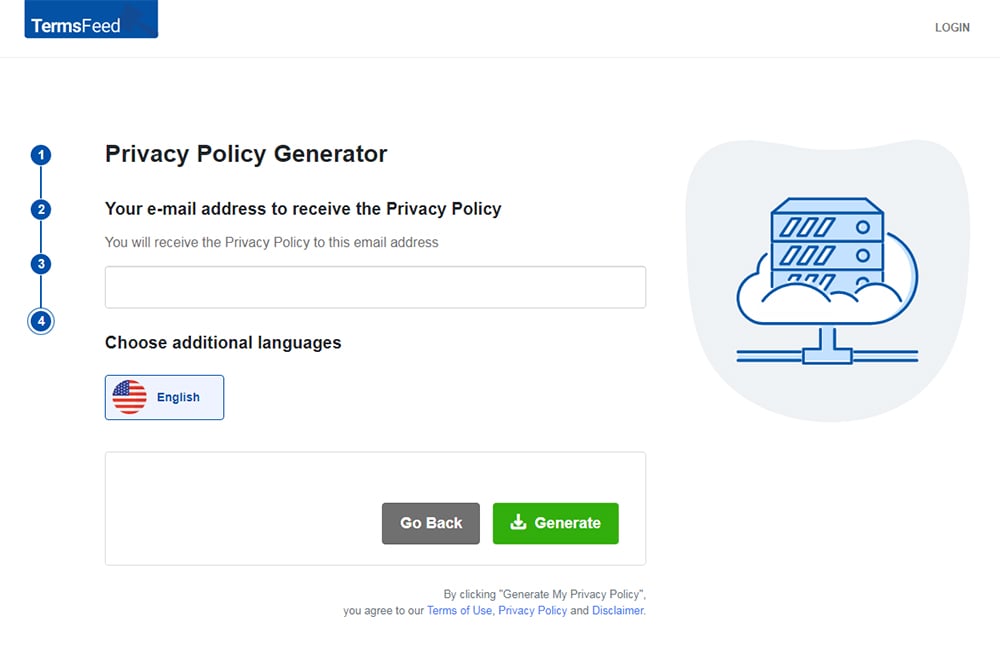
You'll be able to instantly access and download your new Privacy Policy.


- 1. Why Employers Monitor Remote Employees
- 1.1. Productivity and Accountability
- 1.2. Security and Asset Protection
- 1.3. Legal Compliance
- 1.4. Insider Threats and Misuse
- 2. A Breakdown of Common Remote Monitoring Methods
- 3. Legal Requirements for Remote Work and Employee Monitoring
- 3.1. US Employee Monitoring Laws
- 3.1.1. Electronic Communications Privacy Act (ECPA)
- 3.1.2. National Labor Relations Act (NLRA)
- 3.2. US State-Specific Monitoring Laws
- 3.3. EU/EEA and UK Privacy Laws
- 3.3.1. GDPR Privacy Principles
- 3.3.2. GPR Lawful Basis for Processing Data
- 3.3.3. GDPR Data Protection Impact Assessment (DPIA)
- 3.3.4. Employee Rights Under the GDPR
- 3.4. UK-Specific Considerations
- 3.5. Employee Monitoring Laws in Other Key Regions
- 3.5.1. Canada: PIPEDA and Provincial Privacy Laws
- 3.5.2. Australia: Privacy Act and State Workplace Surveillance Laws
- 3.5.3. Latin America and Asia-Pacific: General Trends
- 4. Ethical Considerations for Remote Employee Monitoring
- 5. Best Practices for Responsible Remote Employee Monitoring
- 6. Summary
Why Employers Monitor Remote Employees
Let's start by going over the reasons employers monitor (or may want to monitor) their employees' digital activities in the first place.
Productivity and Accountability
One of the primary reasons employers monitor remote workers is to understand how they spend their work time. When teams work from different locations, seeing patterns like unresponsiveness or repeated disengagement becomes harder.
Many companies use time-tracking or activity-logging tools that record which apps employees use, when they're active, and for how long. Some go further and capture keyboard strokes or idle time to paint a picture of output.
Used carefully, this data can help identify subtle friction areas. For instance, a manager might notice a team member's drop in output and use monitoring data to see if a software issue explains it. But when monitoring is taken too far, it starts to look less like productivity support and more like overbearing surveillance.
Security and Asset Protection
Remote work expands your company's digital perimeter from a controlled office network to dozens of home WiFi connections and coffee shop hotspots. These connection points represent a vulnerability since they don't offer corporate security controls.
In response, employers are starting to monitor things like app usage, file transfers, and VPN logins to flag anything suspicious or potentially harmful. For instance, tracking email and message logs can help spot unusual communication patterns that may hint at data theft or unauthorized sharing.
Legal Compliance
In certain industries, some level of employee monitoring may be necessary for regulatory compliance. Specifically, companies working in financial and healthcare must meet strict rules around data access, communication logs, and internal controls. For example:
- HIPAA (for healthcare): Requires strict data access controls and auditing
- The US SEC (for financial services companies): Requires preserving electronic communications for recordkeeping and compliance with federal securities laws.
- SOX (Sarbanes-Oxley): Requires publicly traded US companies to confirm financial reporting accuracy and establish strong internal controls.
- FINRA (for broker-dealers): Requires firms to supervise the activities of their financial professionals, including communications and transactions, to protect investors.
Insider Threats and Misuse
Not every risk comes from outside. Disgruntled or careless employees can cause significant damage, whether it's deleting critical files, leaking sensitive data, or something equally damaging.
Monitoring login activity, downloads, or file sharing can help flag these threats before they escalate. In some cases, employers also review email logs or chat messages (on company channels) when there's a business or security concern.
This kind of monitoring is often part of a broader risk management strategy, but it only works when it respects boundaries and is clearly communicated.
A Breakdown of Common Remote Monitoring Methods
Here's a quick breakdown of the most common types of digital monitoring methods, what each one typically reveals, and why companies use them.
| Activity Monitored | What It Reveals | Why Employers Use It |
| App usage | Time spent in specific tools or software | Tracks productivity patterns and tool adoption |
| Web browsing history | Sites visited during work hours | Flags security risks or repeated non-work browsing |
| Email and chat logs | Volume, frequency, and patterns of communication | Helps meet compliance requirements and review team collaboration |
| Keystroke tracking | Typing activity, frequency, and pace | Often used (controversially) to measure engagement or detect idle time |
| Screen captures | Snapshots of employee screens at intervals | Verifies work activity; sometimes helpful for compliance documentation |
| File transfers | Movement of files in and out of the company system | Prevents unauthorized data sharing or accidental leaks |
| VPN/device location data | Where and when employees access systems | Confirms remote access security and flags suspicious access points |
| Webcam surveillance | Live or recorded video feed from employee webcams | Rarely used; typically applied in high-risk or high-security roles |
With the reasons and methods out of the way, let's go over the legal and ethical requirements for employee monitoring across major jurisdictions worldwide.
Legal Requirements for Remote Work and Employee Monitoring
Here are some of the most relevant legal requirements for employee monitoring across various jurisdictions, including the US, EU/EEA, UK, Canada, and more.
US Employee Monitoring Laws
In the United States, a collection of federal and state laws shapes what employers can and cannot do when it comes to monitoring remote employees.
Electronic Communications Privacy Act (ECPA)
The ECPA, passed in 1986, is the US federal baseline for monitoring electronic communications in the workplace. It broadly prohibits the interception of electronic messages (like emails, instant messages, or calls) while they are in transit.
But there are two major exceptions that employers often rely on:
- The business purpose exception allows employers to monitor communications on company-owned devices if they have a legitimate reason to do so, within the "ordinary course of business."
- The consent exception allows for monitoring if at least one party involved has given consent, which is often handled through a signed policy or employment agreement.
Keep in mind that these exceptions don't give you blanket coverage to monitor employees. Intercepting personal emails, texts, or social messages sent from private accounts or on personal devices can fall outside legal bounds, even during work hours.
National Labor Relations Act (NLRA)
The NLRA protects employees' rights to engage in "protected concerted activity." This means employees can discuss wages, working conditions, or union organizing without fear of employer interference.
Any monitoring that appears to spy on or discourage these activities can violate the NLRA. For example, specific monitoring of union organizers could be illegal if it intends to stop their protected actions.
Even if you don't act on the information, the act of monitoring alone can raise legal red flags if it discourages lawful discussions between employees.
US State-Specific Monitoring Laws
Some states go further than federal law, especially when it comes to notice and consent. Just a few examples are as follows:
- New York: As of 2022, New York's Electronic Monitoring Law requires private-sector employers to give all employees written notice about electronic monitoring. The notice must clearly describe what types of monitoring may happen (email, internet, phone, etc.). Employers must also get a written or electronic acknowledgment from employees receiving this notice and post the notice in a visible place.
- Connecticut: Connecticut's Electronic Monitoring Notice Law requires employers to give prior written notice to all applicable employees about electronic monitoring. They must also post a notice in a visible place. There's an exception in cases of suspected illegal conduct or behavior that violates the employer's legal rights, but generally, notice is required.
- Delaware: Under Delaware's Monitoring Notification Law, employers must provide notice before monitoring telephone calls, email, or internet use. This can be a one-time written notice that employees acknowledge, or it can be an electronic notice given at least once each day an employee accesses employer-provided services.
- California: The California Code has an "All-Party Consent" provision that requires everyone on a phone call to be informed if the conversation is recorded. This means employers cannot record phone calls or private conversations unless every person on the call knows about and agrees to the recording. This requirement applies more to employers who record customer service calls or internal team discussions.
- CCPA/CPRA: While primarily a consumer privacy law, the CCPA (as amended by CPRA) also affects employee data in California. Applicable businesses must let employees know what personal information is collected, why it is collected, and how long it is kept. Employees also gain rights to access, correct, and request the deletion of their data collected by employers.
- Illinois: Laws like Illinois's Biometric Information Privacy Act (BIPA) set strict rules for collecting and using biometric data (e.g., fingerprints, facial scans, etc.). BIPA requires employers to get informed written consent from employees before collecting any biometric data. It also mandates specific data security and retention policies for such information.
EU/EEA and UK Privacy Laws
Monitoring employees in the EU/EEA falls primarily under the General Data Protection Regulation (GDPR). Following Brexit, the UK adopted its own version, the UK GDPR, which mirrors the EU's GDPR in nearly all aspects relevant to employee monitoring.
The GDPR sets a dramatically higher standard for employee monitoring than most other jurisdictions. If you have employees working remotely from anywhere in the EU or EEA, you're subject to these requirements regardless of where your company is headquartered.
Here are the most relevant GDPR requirements when it comes to employee monitoring.
GDPR Privacy Principles
Article 5 of the GDPR provides a set of binding data protection principles that all applicable organizations must abide by.

Every employee monitoring practice must meet these principles:
- Lawfulness, fairness, and transparency: Monitoring must have a valid legal basis, be fair in its impact, and be clearly communicated upfront.
- Purpose limitation: You can only use monitoring data for the specific purposes you disclosed. If you collect keystroke data to measure productivity, you can't later use that same data for disciplinary actions unless you explicitly stated that purpose upfront.
- Data minimization: Collect only the minimum data needed for your stated purpose. Blanket surveillance that captures everything an employee does won't meet this principle.
- Storage limitation: You can't keep employee surveillance data indefinitely "just in case." You must delete it once it's no longer needed for your original purpose.
- Integrity and confidentiality: You must protect employee data against unauthorized access or misuse.
- Accountability: You must be able to prove your compliance with all of the above on request.
GPR Lawful Basis for Processing Data
Under Article 6, the GDPR sets out six lawful bases for processing the information of data subjects (which includes employees). To monitor employees legally under the GDPR, you must identify and document at least one of these lawful bases for data processing.

These are the most relevant options for employers:
- Legal obligation: This applies if a specific EU law requires monitoring for specific regulatory compliance (e.g., finance or healthcare laws).
- Contractual necessity: This basis allows monitoring when it's necessary to fulfill an employment contract (e.g., tracking time to process payroll).
-
Legitimate interests: Often the most relied-upon basis for general monitoring. But it isn't automatic. You must show that monitoring employees:
- Serves a real business interest
- Is necessary and proportionate to the nature of the job
- Doesn't override the employee's privacy rights
To use this basis, you must conduct and document a Legitimate Interest Assessment (LIA), which basically means weighing your business interest against the impact on employee privacy.
- Consent: While technically allowed, consent is rarely valid for employee monitoring in practice. Because of the employer-employee power imbalance, regulators view employee consent as inherently problematic. The fear of job consequences makes any "consent" questionable.
GDPR Data Protection Impact Assessment (DPIA)
A DPIA is a risk assessment required when data processing is "likely to result in a high risk to the rights and freedoms of individuals." Intrusive monitoring practices like keystroke logging, webcam monitoring, or large-scale data collection often fall into this category.
In these cases, a DPIA is legally required under the GDPR to help businesses identify and reduce privacy risks before starting employee monitoring. This assessment involves carefully considering questions like:
- Is this monitoring necessary?
- Is it proportionate?
- What are the less intrusive alternatives?
- How will risks be reduced?
A DPIA essentially helps identify risks, assess their likelihood and severity, and outline measures to mitigate them.
Employee Rights Under the GDPR
Even when monitoring is lawful, employees still retain several rights over how their personal data is handled by employers. These include:
- Access: They can ask to see what data you've collected on them.
- Rectification: They can request corrections to inaccurate data.
- Erasure: They can request deletion of data if it's no longer needed or was collected unlawfully.
- Restriction of processing: They can request a pause on data use while a dispute is reviewed.
- Objection: They can object to processing based on legitimate interests if they believe their rights outweigh the company's interest.
You must inform employees of these rights and have systems in place to respond to their requests within 30 days.
UK-Specific Considerations
As mentioned, the UK implemented the UK GDPR, which is almost identical to the EU GDPR. As such, all the principles and requirements outlined above for the EU/EEA largely apply to businesses operating in the UK.
The UK's data protection regulator, the Information Commissioner's Office (ICO), also offers detailed guidance on lawfully monitoring employees, with an emphasis on the following:
- Necessity: You must demonstrate that monitoring is necessary for your stated purpose and that less intrusive alternatives won't achieve the same goal.
- Transparency first: Employees must know about monitoring before it starts. The ICO expects clear, separate notifications about monitoring, not buried clauses in employment contracts.
- Proportionality: The monitoring must be proportionate to the risk or business need.
- Impact on Workers: You must carefully consider how your specific monitoring method will affect employee wellbeing, stress levels, and work-life balance.
- Avoiding excessive surveillance: The more invasive the method (e.g., screen recordings, keystroke logs), the higher the standard for justification.
In the words of Emily Keaney, Deputy Commissioner of the Information Commissioner's Office:
"Our research shows that today's workforce is concerned about monitoring, particularly with the rise of flexible working - nobody wants to feel like their privacy is at risk, especially in their own home.
As the data protection regulator, we want to remind organisations that business interests must never be prioritised over the privacy of their workers. Transparency and fairness are key to building trust, and it is crucial that organisations get this right from the start to create a positive environment where workers feel comfortable and respected.
We are urging all organisations to consider both their legal obligations and their workers' rights before any monitoring is implemented. While data protection law does not prevent monitoring, our guidance is clear that it must be necessary, proportionate, and respect the rights of workers. We will take action if we believe people's privacy is being threatened."
Employee Monitoring Laws in Other Key Regions
While US and EU/UK laws often take the spotlight, employee privacy rights are gaining more legal structure in other parts of the world, too. If you have employees working remotely in other regions, understanding their privacy and workplace surveillance laws is vital.
Here's a concise breakdown of what you should know across Canada, Australia, and select countries in Latin America and the Asia-Pacific region.
| Country | Legal Basis | Notice Requirement | Consent Needed | Notable Law |
| UK | Legitimate Interest | Yes | Rarely valid | UK GDPR |
| Canada | Reasonableness | Yes | Implied in limited cases | PIPEDA |
| Australia | Lawful Purpose + Written Notice | Yes (14 days) | Yes (varies by state) | Workplace Surveillance Act (NSW) |
| Brazil | Legal basis required | Yes | Often required | LGPD |
Canada: PIPEDA and Provincial Privacy Laws
In Canada, workplace privacy is shaped by the Personal Information Protection and Electronic Documents Act (PIPEDA), a federal law that applies to most private-sector organizations. Other provincial laws may also apply depending on where your employees are located.
When it comes to employee monitoring, Guidance from the Office of the Privacy Commissioner of Canada has the following provisions:
- PIPEDA applies when personal data is collected, used, or disclosed during commercial activities.
- Employee monitoring must be reasonable, necessary, and proportional to the business objective.
- Employers must provide clear notice of monitoring practices, including what is collected and why.
- Implied consent may apply (for less sensitive monitoring), but only when the employee has been properly informed.
Some provinces (e.g., British Columbia, Alberta, Québec) have their own privacy statutes. In all provinces, however, the requirements are largely consistent: transparency, necessity, and minimal intrusiveness are non-negotiable.
Australia: Privacy Act and State Workplace Surveillance Laws
Australia's privacy landscape is fragmented, but generally follows a consent-based model governed by a mix of federal and state laws.
In particular, the Australian Privacy Act of 1988 governs personal information handling and extends to certain monitoring activities for many businesses. Some states (like New South Wales and Victoria) have additional workplace surveillance laws that require written notice before monitoring begins.
In New South Wales, for example, the Workplace Surveillance Act 2005 requires employers to inform employees at least 14 days in advance if they plan to monitor them.

There's a general expectation across Australian jurisdictions that monitoring must be proportionate, disclosed, and for a lawful purpose. Monitoring without proper notice may violate most workplace surveillance laws, even if done for security or compliance reasons.
Latin America and Asia-Pacific: General Trends
While legal protections in Latin America and many parts of Asia-Pacific aren't as uniform or expansive as the GDPR, there's a steady shift toward tighter workplace privacy rules. Countries like Brazil, Argentina, and Mexico have passed or updated data protection laws that increasingly mirror European standards.
Brazil's Lei Geral de Proteção de Dados (LGPD), for instance, requires a legal basis for data processing and emphasizes transparency and purpose limitation, much like the GDPR.
Unsurprisingly, Asia-Pacific also presents a mixed legal landscape. China, Japan, Singapore, and South Korea all have strict privacy and labor/surveillance laws that can impact employee monitoring in different ways. One common theme, however, is the need for transparency and minimal intrusiveness, even when not explicitly required by law.
As countries continue to modernize their privacy laws, it's reasonable to anticipate more strict or restrictive regulations and consider implementing privacy-by-design approaches that can adapt to evolving requirements.
Ethical Considerations for Remote Employee Monitoring
Monitoring remote workers sits at the intersection of two high-stakes concerns: company interests and personal privacy.
Remote work already blurs the line between professional and personal space. If employees feel like they're being watched too closely or without good reason, they may grow resentful or disengaged. This tension deepens when monitoring is hidden or constant. And it often backfires.
In one Harvard Business Review study, researchers found that excessive monitoring often encourages the very behaviors it aims to prevent, like cheating and resistance to oversight. In other words, watching harder can make people behave worse, which only leads to legal and company image problems.
For example, in a case in the Netherlands, a company fired a remote employee for refusing to leave their webcam on throughout the workday. The employee sued, and the court ruled that constant video monitoring (with no sufficient justification) violated privacy rights. The company had to pay damages and lost public credibility.
This is why regulators like the UK ICO emphasize proportionality and legal justification (among other requirements) when approving monitoring systems.

None of this means employers should ignore potential risks or skip monitoring altogether. But transparency, fairness, and proportion must be baked into your process. Not only does it ensure legal compliance, but it also helps sustain morale and trust in remote teams.
Best Practices for Responsible Remote Employee Monitoring
If you monitor remote employees, how you do it matters just as much as whether you do it at all. A thoughtful approach can protect both your company and your team. Here are a few best practices to do just that:
- Develop a clear, comprehensive monitoring policy: Start with a written policy that spells out exactly what monitoring looks like in your company. Be specific about what you monitor, why you're monitoring it, how the data is stored, who can access it, how long it's kept, and what rights employees have. Make this policy easy to find, typically in an employee handbook or as part of onboarding, and update it as laws or technology change.
- Prioritize transparency and communication: Monitoring should never come as a surprise. Discuss it upfront, ideally during hiring, and revisit it regularly. Send occasional reminders and invite questions. When legally required (or just as a precautionary measure), get written acknowledgement.
- Choose the right tools: Your monitoring tools should serve a clear purpose. If your goal is to track work progress, for instance, use a project management tool, not a keystroke logger. Also, favor tools with privacy-focused settings, limited data access, and strong security protections.
- Distinguish between company and personal devices: Employers typically have more freedom to monitor activity on company-owned devices and networks. If you allow personal devices for work, you'll need a Bring Your Own Device (BYOD) policy to clarify what can be monitored and what's off-limits. You should also consider using a Mobile Device Management (MDM) tool to separate work information from personal files on these devices for an extra layer of privacy protection.
- Focus on results, not just activity: Activity logs tell you what someone's doing. They don't always tell you if the work's getting done. Whenever possible, shift from monitoring time spent to measuring outcomes. That supports trust and performance without leaning on micromanagement.
- Seek legal counsel: The laws around employee monitoring vary significantly and change over time. Before rolling out any new monitoring practice, speak to a legal professional who understands your industry and legal jurisdiction. They can help you stay compliant and avoid costly missteps down the line.
Summary
Legally sound employee monitoring means finding a middle ground between your business's need for visibility and an employee's right to privacy. Both are important for a healthy and productive work environment.
Across all laws and ethical concerns explored above, the biggest recommendations for employers are as follows:
- Understand and comply with applicable laws for employee monitoring
- Only monitor what is absolutely essential for legitimate business goals
- Clearly communicate what, how, and why you monitor
- Choose the least invasive monitoring tools that meet your business needs
- Document your business's justification for each type of monitoring
Keep in mind that oversight doesn't have to come at the cost of morale. A monitoring policy that ticks the legal boxes but leaves your team uneasy may be worth rethinking. Employees who feel supported by your monitoring practices, rather than surveilled, become your strongest advocates.

The first step to compliance: A Privacy Policy.
Stay compliant with our agreements, policies, and consent banners — everything you need, all in one place.


