


AI Summarize


Share


Whether you call them Terms & Conditions (T&Cs), Terms of Service, or Terms of Use, you need a set of rules that give you control over how users interact with your website or app.
Terms and Conditions may not be required by law, but they are necessary if you are going to deliver excellent customer service and retain the right to remove users who cause trouble.
The question is, are Terms & Conditions enforceable? In the real world, do Terms & Conditions agreements really hold up in court? We're going to explore examples of court cases from the US, Canada, and the EU to answer this question and explore how you can create T&Cs that will stand up in court.
Our Terms and Conditions Generator makes it easy to create a Terms and Conditions agreement for your business. Just follow these steps:
-
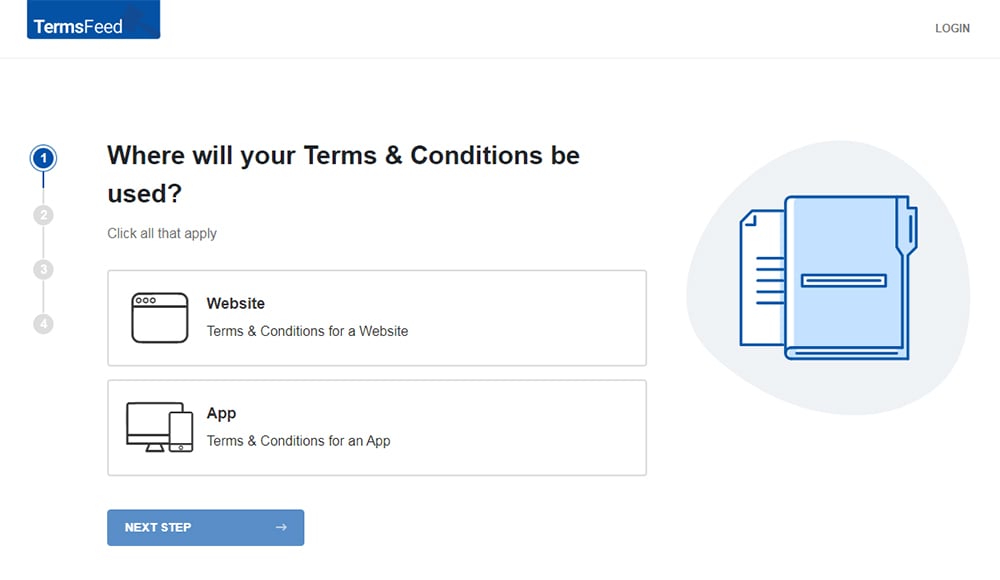
At Step 1, select the Website option or the App option or both.
-
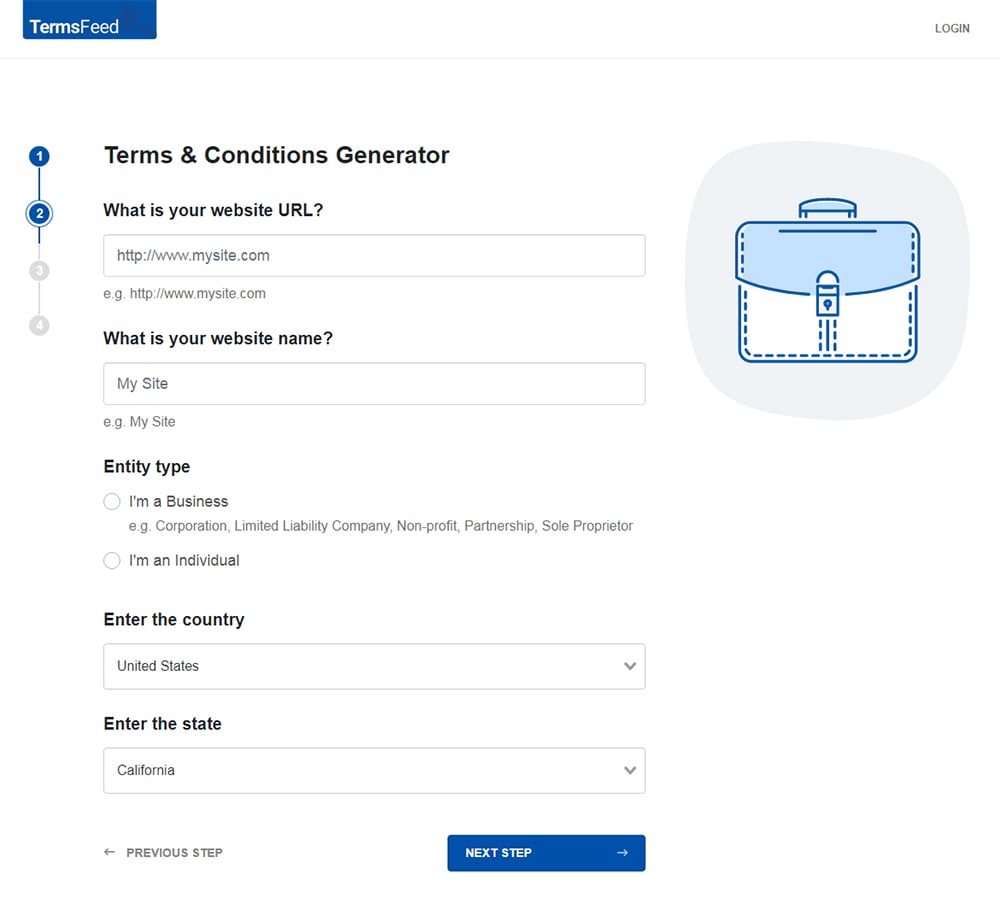
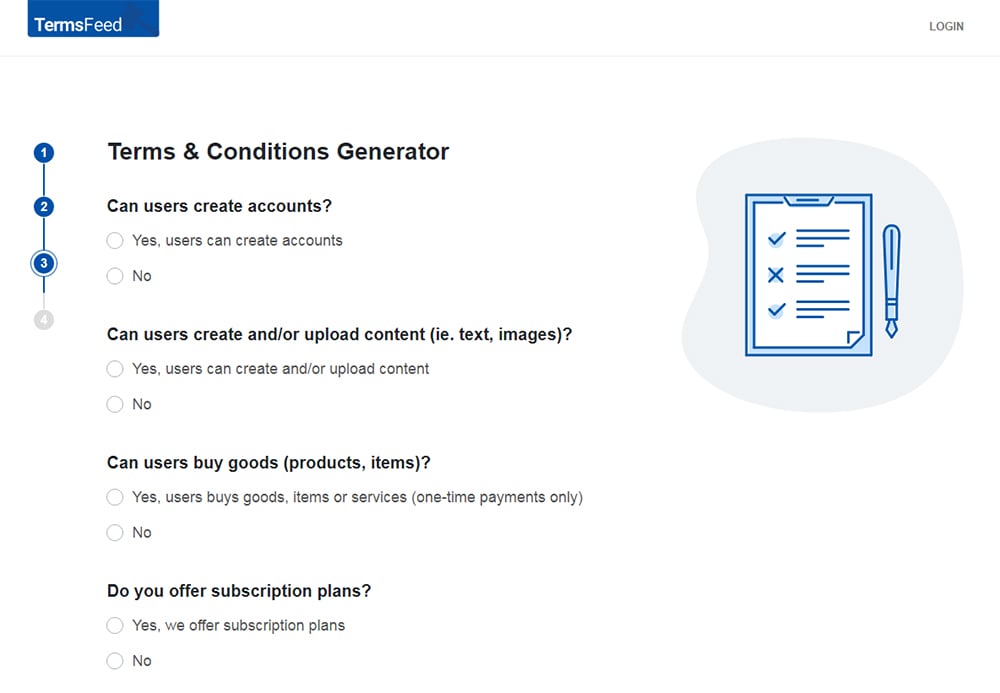
Answer some questions about your website or app.
-
Answer some questions about your business.
-
Enter the email address where you'd like the T&C delivered and click "Generate."
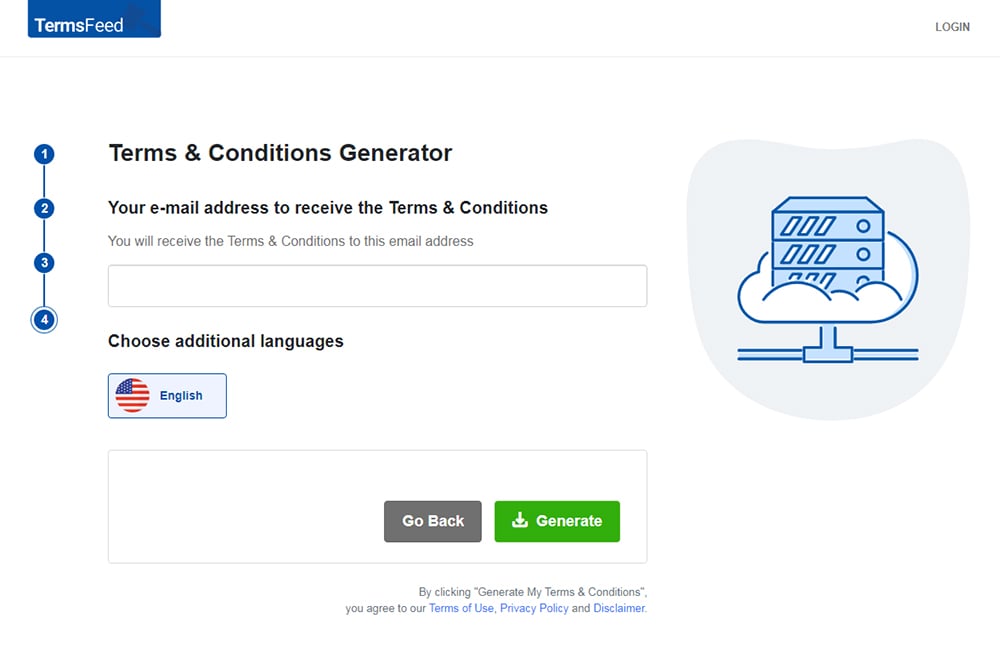
You'll be able to instantly access and download the Terms & Conditions agreement.


- 1. Are T&Cs Enforceable?
- 2. US Legal Framework: State Contract Law
- 2.1. Assent matters
- 3. Case Study: Nguyen v. Barnes & Noble Inc.
- 3.1. Unenforceable Terms and Conditions
- 3.2. The end of browsewrap?
- 4. Case Study: Alan Ross Machinery Corp. v. Machinio Corp.
- 4.1. Notice of Terms and Conditions essential
- 4.2. Making browsewrap enforceable
- 5. Case Study: In Re Zappos.com, Inc., Customer Data Security Breach Litigation
- 5.1. Attempt to enforce Terms and Conditions
- 5.2. Browsewrap failure
- 6. Enforcing Terms & Conditions Agreements in Canada
- 7. Case Study: Douez v Facebook, Inc.
- 7.1. Venue clause dispute
- 7.2. Divided decision
- 8. Case Study: Kanitz v. Rogers Cable Inc.
- 8.1. Terms and Conditions upheld
- 8.2. Implications for Canadian T&Cs
- 9. The EU's Stance on Terms & Conditions
- 10. Case Study: Jaouad El Majdoub v CarsOnTheWeb.Deutschland GmbH
- 10.1. Clickwrap upheld
- 11. Best Practices for Business Owners
- 12. Summary
Are T&Cs Enforceable?
The short answer is, it depends. The key variables are the jurisdiction (which country or state enforces the T&C agreement) and how the T&Cs are written.
To write enforceable T&C agreements, businesses need to consider the following legal principles:
- Notice: Users must be aware of the Terms & Conditions.
- Acceptance: Users must understand how to accept or reject the T&Cs.
- Accessibility: Businesses must ensure their T&C agreements are easily accessible for all users.
As we will see in the following court cases, getting these three principles right can make the difference between a legal victory and a costly embarrassment.
US Legal Framework: State Contract Law
In the US legal framework, Terms & Conditions agreements are part of contract law. Contracts are regulated and enforced by the states. However, all states use the Uniform Commercial Code (UCC).
As stated by the Uniform Law Commission (ULC), the UCC is a "uniformly adopted state law," meaning it is in force in all states.
According to the ULC, it means "businesses can enter into contracts with confidence that the terms will be enforced in the same way by the courts of every American jurisdiction." However, not all states have adopted all articles in full, and some include modifications and different interpretations.

Assent matters
In the United States, whether Terms & Conditions agreements can be enforced or not often hinges on how users assent or agree to their terms.
Terms & Conditions use two main methods of obtaining assent from users, both of which have pros and cons:
- Clickwrap agreements: Users must take action, such as clicking an "I agree" button to indicate that they agree to the T&Cs.
- Browsewrap: Users assent to the T&C agreement simply by using the service, with no requirement to take definite action. For example, browsing a website or using a free online service could amount to assenting to the T&Cs.
Let's take a look at a few examples of how T&Cs have held up when challenged in state courts.
Case Study: Nguyen v. Barnes & Noble Inc.
This 2014 case centered around the cancelled sale of two HP Touchpads. Mr Nguyen had purchased the two devices in a fire sale, only to receive an email from Barnes & Noble the next day, cancelling the order due to unexpectedly high demand.
Mr Nguyen filed a class-action lawsuit (a legal claim made on behalf of a larger group of affected people) against Barnes & Noble for "deceptive business practices and false advertising," as shown below in the official case summary.

Unenforceable Terms and Conditions
This is when Barnes & Noble tried to enforce its Terms of Use agreement. Barnes & Noble's Terms of Use included an arbitration agreement. Arbitration is an alternative form of dispute resolution that does not involve civil litigation - fighting the case before a judge and jury in a civil trial.

The case did not dispute that, as seen below, the arbitration clause was clearly present in the Terms of Use. Instead, the case centered around the use of browsewrap to obtain users' assent to the Terms of Use.

The Terms of Use were posted at the bottom of the Barnes & Noble website, but assent was obtained by a browsewrap agreement. Mr Nguyen and other users were not required to take any action to indicate assent. On this basis, Mr Nguyen contended that he was not bound by the Terms of Use because he did not have notice or assent to the Terms of Use.
The District Court agreed with Mr Nguyen, and Barnes & Noble appealed. The United States Court of Appeals for the Ninth Circuit upheld the District Court's verdict:

The Ninth Circuit's summary indicated that in this instance, a browsewrap agreement was "insufficient notice" of the Terms of Use, and Mr Nguyen, "thus did not enter into an agreement with Barnes & Noble to arbitrate his claims."
The end of browsewrap?
Is the takeaway for businesses that browsewrap agreements are unenforceable? It's not as cut-and-dry as that. The Ninth Circuit's opinion included instances where a browsewrap agreement could be enforceable, namely "when there are reasons to believe that the [website user] is aware of the [website owner's] terms."
In the opinion of PennState Law, the Ninth Circuit missed an opportunity to set a clear precedent around browsewrap agreements.

Therefore, in certain settings, browsewrap may be an acceptable way of giving assent to T&Cs. Protect your business by getting qualified legal advice about the right option for your company.
Case Study: Alan Ross Machinery Corp. v. Machinio Corp.
In 2018, the Northern District of Illinois rendered a similar decision about a browsewrap Terms of Use agreement. The case of Alan Ross Machinery Corp. v. Machinio Corp. centered around allegations that the defendant had extracted sales listing data from Alan Ross Machinery Corp's website and reproduced it on Machinio's site, a process known as web scraping.
Alan Ross Machinery Corp. alleged this violated its Terms of Use, which included the standard clause that visitors may not, "may not copy, reproduce, modify, create derivative works from, nor distribute content from this site without our prior written consent; and reproductions and derivatives are available for $500 US Dollars per asset."
Notice of Terms and Conditions essential
Machinio's request to dismiss the case was granted because of Alan Ross's use of a browsewrap agreement. Alan Ross argued that Machinio had broken its Terms of Use, but not that Machinio had knowledge of them. So, Machinio did not have notice, thus it was not bound by the browsewrap agreement.

Making browsewrap enforceable
The takeaway from this case is that browsewrap Terms & Conditions can be enforceable, but users must have sufficient notice. For safety, many businesses use clickwrap, forcing users to take action to show they assent to the T&Cs.
Case Study: In Re Zappos.com, Inc., Customer Data Security Breach Litigation
In 2012, the online retailer Zappos.com suffered a data breach. In response, many customers filed lawsuits against Zappos.com, alleging the business was negligent in its duty to protect their private data. At Zappos.com's request, these were consolidated into a single case, which was to be heard in the District of Nevada.
Attempt to enforce Terms and Conditions
Zappos.com then tried to compel the trial to move to arbitration. This would have stopped the class action and forced each customer to go through a confidential arbitration process. The basis for this move was Zappos.com's Terms of Use, which stated that any dispute would be subject to arbitration.

Browsewrap failure
The court decided this clause was unenforceable because it was part of a browsewrap agreement. It failed to give proper notice in two main ways:
- Terms of Use link did not stand out on the page
- Website did not direct users to the Terms of Use at any point in their use of the site
Here it is:

The court decided that the browsewrap agreement did not provide evidence that the user had seen, let alone agreed to, the Terms of Use.

The message is clear: beware of browsewrap agreements.
Enforcing Terms & Conditions Agreements in Canada
The Competition Bureau Canada sets out guiding principles for Canadian businesses when creating Terms & Conditions agreements. These include:
- No surprises
- Accessibility
- Easy to understand language
- Full information
- Open communication
- Adherence to legal obligations
So, how do Terms & Conditions stand up when challenged in Canadian courts?
Case Study: Douez v Facebook, Inc.
This 2017 case saw Ms. Douez, a resident of British Columbia, attempt to bring a class action lawsuit against Facebook for using their name and likeness without their consent. Ms. Douez alleged that Facebook had violated subsection 3(2) of the B.C. Privacy Act.
Venue clause dispute
Unlike the cases considered above, this dispute focused on where it would be resolved rather than whether the user agreed to the Terms & Conditions.
Facebook tried to suspend the case by arguing that, according to its Terms of Use, claims must be filed in California. The British Columbia Supreme Court refused to apply this clause, but this was overturned by the British Columbia Court of Appeal. Finally, the Supreme Court of Canada decided Facebook's forum selection (court case location) clause was unenforceable.

Divided decision
The Supreme Court of Canada's decision was far from unanimous, passing with a 3-1-3 split decision. The result is a lack of certainty for businesses that want to be sure the clauses they include in the Terms & Conditions agreements will be enforceable if challenged. It highlights the importance of seeking qualified legal advice from lawyers specializing in Canadian contract law before including Terms & Conditions on your site.
Case Study: Kanitz v. Rogers Cable Inc.
The 2002 Kanitz v. Rogers Cable Inc. case is one of the most important Canadian decisions ever rendered on website Terms of Use.
A group of Rogers Cable customers began a class action challenging an amendment to Rogers' User Agreement. Rogers updated its User Agreement without informing its clients, beyond posting an updated copy on its website.
The group of customers argued they should have been informed of the updated agreement by email, especially as the updated clause forced them to resolve disputes via arbitration, rather than through the court system.
Terms and Conditions upheld
In this landmark case, the Ontario Superior Court ruled in favor of Rogers. It found that Rogers had provided sufficient notice and was not required to notify its customers by email, as this was not required in its Terms & Conditions.

Implications for Canadian T&Cs
Canadian law quickly changed in response to this decision. Under Ontario's 2002 Consumer Protection Act, arbitration clauses became invalid.

The Consumer Protection Act also included a clause making "no class action" clauses unenforceable, strengthening consumers' rights.

So while Kanitz v. Rogers Cable Inc. underlined the enforceability of Terms & Conditions agreements, subsequent developments have limited what businesses may include.
The takeaway? Ensure your T&Cs align with Canadian provincial and federal laws, whether you use browsewrap or clickwrap agreements.
The EU's Stance on Terms & Conditions
Moving across the water to Europe, we see a familiar pattern continuing. The General Data Protection Regulation (GDPR) does not prohibit browsewrap, but it has made it less practical if you are targeting EU customers. The GDPR requires explicit and informed consent, which makes browsewrap agreements tough to enforce.
However, controversy also arose around the enforceability of clickwrap agreements. A 2015 case helped clarify the EU's position and establish a gold standard for European T&C agreements.
Case Study: Jaouad El Majdoub v CarsOnTheWeb.Deutschland GmbH
In this case, a German car dealer, Mr El Majdoub, alleged that CarsOnTheWeb.Deutschland GmbH had cancelled the sale of an electric vehicle because the price was disadvantageously low. Mr El Majdoub brought an action in Germany, but the defendant showed that in its Terms & Conditions, any disputes would be heard by courts in Leuven, Belgium.
Mr El Majdoub alleged that the Terms & Conditions were not incorporated into the Sale Agreement in line with Article 23(1) of the Brussels I Regulation.
In essence, the issue was whether a clickwrap T&C agreement was valid and enforceable.
Clickwrap upheld
The Court of Justice of the European Union (CJEU) settled the question of whether electronic agreements, in this case a clickwrap agreement, met the requirements of Article 23(1) of the Brussels I Regulation.
Simply put, it showed that a clickwrap agreement, in which the user is given the opportunity to view the T&Cs and click to consent to them, is a sufficient method of accepting the contract under EU law. In this case, the Terms & Conditions allowed the vendor to choose the location where the dispute would be heard.
The CJEU ruled that clicking the box and accepting the Terms & Conditions was sufficient under EU law. Thus, clickwrap was established as valid and enforceable.

The takeaway? If you are targeting EU customers, clickwrap is the way to go.
Best Practices for Business Owners
As we have seen, Terms & Conditions agreements can be a valuable way to protect your business when they are set up correctly. Browsewrap agreements are tough to enforce and have resulted in costly litigation.
The following checklist can help you create T&C agreements that manage customer expectations and protect your business from unnecessary legal headaches.
- Give notice: Make it easy for your customers to read your T&Cs before they agree to them. Encourage them to do so to give them ample opportunity to make an informed choice.
- Choose clickwrap: Make sure it is clear what your customers are agreeing to. Then obtain explicit assent from your customers by having them click an "I Accept" or "I Agree" button.
- Use clear language: Your Terms & Conditions should be free of legalese and use everyday language anyone can understand. Do not include hidden clauses or surprises that contradict any claim or offer on your site.
- Keep records: To protect yourself, keep records to prove that users consented to the Terms & Conditions. These should be timestamped and stored in accordance with your Privacy Policy.
- Comply with local and international law: To be enforceable, your T&Cs must comply with all relevant contract laws in the states, provinces, and countries in which your business operates. Work with legal advisors who are experienced in each jurisdiction to ensure they meet their requirements.
Summary
Terms & Conditions (T&Cs) are legal agreements that regulate how a user interacts with a business's website, app, or service. While they are not usually a legal requirement, they can help businesses manage customer expectations, limit liability, and retain control over how users interact with their business. However, T&Cs can only protect your business if they are enforceable.
As the cases cited above have shown, T&Cs often fall down due to using browsewrap rather than clickwrap to obtain user agreement. Therefore, consider obtaining explicit agreement from all users, requiring them to click "I Agree", which makes it far more likely that a court will uphold your T&Cs. Enforceable T&C agreements rely on sound design, compliance with local and international laws, and clear user communication.

The first step to compliance: A Privacy Policy.
Stay compliant with our agreements, policies, and consent banners — everything you need, all in one place.


