


AI Summarize


Share


Sourcepoint is a consent management platform (CMP) that helps publishers manage user consent and comply with privacy rules through customizable consent experiences. It supports the IAB Transparency and Consent Framework (TCF), helping publishers apply consent choices across digital advertising environments. Its core capabilities include consent collection, preference management, and compliance monitoring.
Buyers typically consider Sourcepoint when they need a solution that is scalable across multiple sites and supports ad-driven business models, and have the ability to handle setup complexity and cost. Compared to simpler, user-friendly options like TermsFeed, Sourcepoint is a more complex platform built for large-scale publishers with advanced advertising and consent management needs.
Use our Cookie Consent all-in-one solution (Privacy Consent) for cookies management to comply with GDPR & CCPA/CPRA and other privacy laws:
- For GDPR, CCPA/CPRA and other privacy laws
- Apply privacy requirements based on user location
- Get consent prior to third-party scripts loading
- Works for desktop, tables and mobile devices
- Customize the appearance to match your brand style
Create your Cookie Consent banner today to comply with GDPR, CCPA/CPRA and other privacy laws:
-
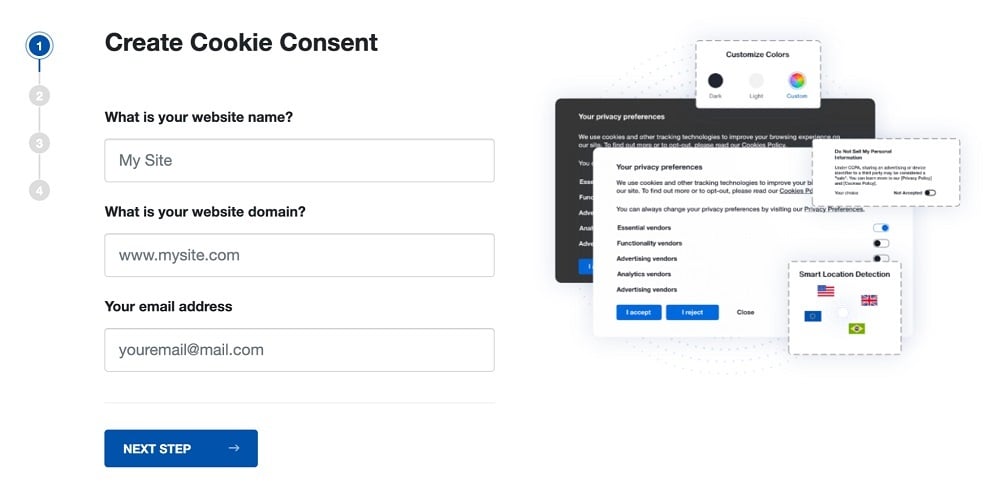
Start the Privacy Consent wizard to create the Cookie Consent code by adding your website information.
-
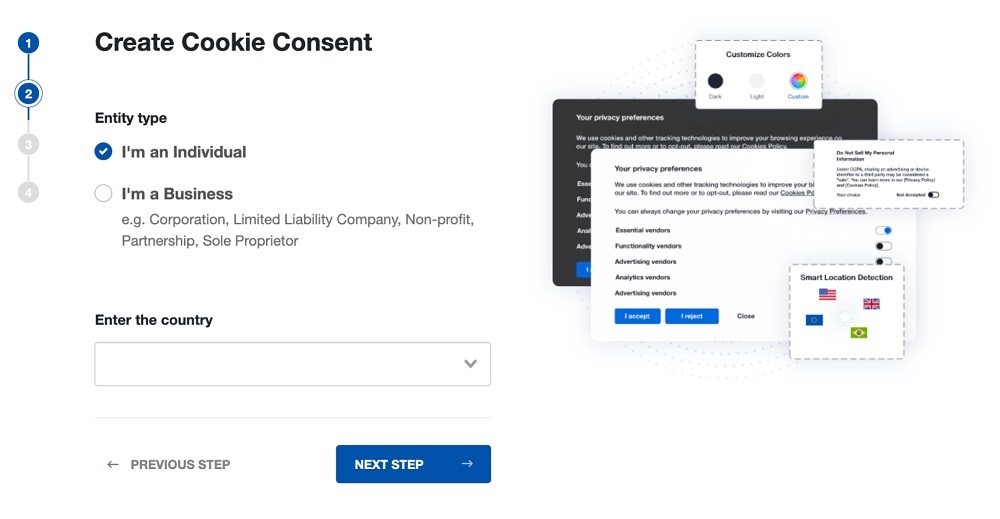
At Step 2, add in information about your business.
-
At Step 3, select a plan for the Cookie Consent.
-
You're done! Your Cookie Consent Banner is ready. Install the Cookie Consent banner on your website:
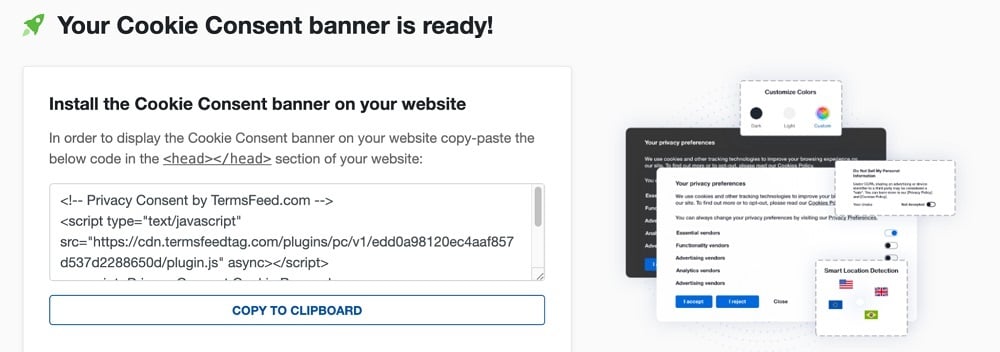
Display the Cookie Consent banner on your website by copy-paste the installation code in the
<head></head>section of your website. Instructions how to add in the code for specific platforms (WordPress, Shopify, Wix and more) are available on the Install page.


- 1. What is Sourcepoint?
- 2. What is the Sourcepoint Price?
- 3. What are the Best Sourcepoint Features?
- 3.1. 1. Publisher-Grade Privacy CMP
- 3.2. 2. IAB TCF v2.2 + GPP Multi-Framework Support
- 3.3. 3. Properties Management (Multi-Site/Multi-App)
- 3.4. 4. Advanced Messaging (Subscription Walls, Hard-Walls)
- 3.5. 5. Server-Side Messaging Architecture
- 3.6. 6. Real-Time Bidding (RTB) Integration
- 3.7. 7. A/B Testing & Experimentation Engine
- 3.8. 8. Holistic Privacy Analytics
- 3.9. 9. Diagnose Tool (Vendor & Tag Scanning)
- 3.10. 10. Universal Consent Across Properties
- 3.11. 11. Authenticated Consent for Logged-In Users
- 3.12. 12. Custom Vendor List Builder
- 3.13. 13. AdTech Programmatic Compliance Layer
- 3.14. 14. DSAR & Privacy Request Handling
- 3.15. 15.User Permissions and Access Controls
- 4. How does Sourcepoint Work?
- 4.1. Pre-Deployment Checklist
- 4.2. Implementation Path
- 4.3. Under-the-Hood Mechanics
- 4.4. Pitfalls & Limitations
- 5. What are the Pros of Sourcepoint?
- 6. What are the Cons of Sourcepoint?
- 7. What are the Alternatives to Sourcepoint?
- 7.1. What is the History of Sourcepoint?
What is Sourcepoint?
Sourcepoint is privacy software that helps publishers collect, manage, and communicate user consent for privacy compliance. It connects user consent choices to advertising and analytics systems through frameworks such as the IAB TCF, helping ensure user preferences are applied across digital advertising environments. Sourcepoint was founded in 2015 and is headquartered in New York City.
Sourcepoint is used in large-scale publisher environments that rely on advertising revenue and need to manage user consent across multiple sites and vendors. It supports scalable consent management across complex advertising environments and helps organizations comply with privacy laws such as the European Union General Data Protection Regulation (GDPR) and the California Consumer Privacy Act (CCPA).
What is the Sourcepoint Price?
The Sourcepoint price is structured in tiers and depends on factors such as monthly page views and app users. There is no self-serve free plan.
Here is the pricing information for Sourcepoint plans:
- Essentials: Pricing is $500/month for this entry-level plan that includes websites, multi-regulation compliance, and support for major privacy and consent frameworks.
- Pro: The cost for the Pro plan is $1,250/month. This plan includes everything in the Essentials plan, plus mobile app support and compliance monitoring for 1 region and 1 domain or app scanned per month.
- Enterprise: This plan is quote-based and designed for larger organizations that require support for multiple platforms. It includes multi-region and multi-domain compliance monitoring, preference management, and data subject access request (DSAR) handling.
Costs are quoted in U.S. dollars (USD).
What are the Best Sourcepoint Features?
The best Sourcepoint features are designed for large publishers that need scalable consent management and privacy compliance.
Sourcepoint capabilities include:
- Publisher-grade privacy CMP: A CMP built for large publishers operating complex, ad-supported digital properties.
- IAB TCF v2.2 + Global Privacy Platform (GPP) multi-framework support: Supports industry standards for consent signaling across different privacy and advertising ecosystems.
- Properties management (multi-site/multi-app): Allows organizations to manage consent across multiple websites and mobile apps from a single system.
- Advanced messaging (subscription walls, hard-walls): Helps businesses present different user experiences based on consent choices and subscription status.
- Server-side messaging architecture: Enables server-side delivery of consent messaging across websites and apps.
- Real-time bidding (RTB) integration: Shares consent data with programmatic advertising systems to support compliant ad bidding.
- A/B testing & experimentation engine: Enables organizations to test different consent experiences to optimize user engagement and opt-in rates.
- Holistic privacy analytics: Provides insights into consent rates and user interactions.
- Diagnose tool (vendor & tag scanning): Scans websites and apps to identify and manage third-party vendors and tracking technologies.
- Universal consent across properties: Enables a single consent decision to apply across multiple domains or digital properties.
- Authenticated consent for logged-in users: Links consent preferences to user accounts for consistent tracking across sessions and devices.
- Custom vendor list builder: Enables organizations to define and manage vendor inventories.
- AdTech programmatic compliance layer: Sends consent signals to advertising systems so they follow user privacy choices.
- DSAR & privacy request handling: Helps manage data access, deletion, and opt-out requests.
- User permissions and access controls: Helps businesses control who can access different features and Sourcepoint products.
Let's take a closer look at each of these.
1. Publisher-Grade Privacy CMP
Publisher-grade privacy CMP is a consent management solution designed to help publishers and advertising-driven businesses collect, manage, and enforce user consent across digital properties.
Some of the features are shown below.

It addresses the challenge of managing consent across complex ad-supported ecosystems by centralizing consent collection and sharing consent signals with connected vendors.
Sourcepoint provides configurable consent tools for websites, apps, and connected TV (CTV). It captures user choices and automatically communicates consent signals to connected ad-tech and analytics partners. It supports rules by region and property, allowing centralized control while maintaining localized compliance.
While simpler CMPs are often enough to support the needs of smaller businesses, Sourcepoint is designed for large-scale businesses that require support for programmatic advertising and cross-property consent management.
2. IAB TCF v2.2 + GPP Multi-Framework Support
IAB TCF v2.2 + GPP multi-framework support is a Sourcepoint capability that helps organizations communicate user consent signals in accordance with major industry privacy frameworks used in digital advertising.
This capability translates user consent choices into standardized signals that comply with IAB TCF v2.2 and GPP requirements. It helps ensure consent is consistently communicated to ad-tech and analytics vendors so they know whether data use is allowed.
Sourcepoint collects user preferences through configurable consent banners and turns them into standardized signals that follow privacy framework rules. These signals are shared with connected vendors, with different settings depending on region, framework, and vendor requirements.
Other CMPs are often designed for broader privacy compliance across many industries, while Sourcepoint focuses more on publishing environments where consent directly affects advertising operations.
3. Properties Management (Multi-Site/Multi-App)
Properties management (multi-site/multi-app) is a Sourcepoint capability that helps organizations manage consent settings and privacy configurations across multiple digital properties from a single system.
A property is an individual website, mobile app, or over-the-top (OTT) channel with its own consent messages, vendor lists, campaigns, and privacy settings.
Organizations often find this particularly useful when managing consent across large portfolios of websites, apps, and advertising-supported channels, with separate configurations becoming increasingly complex and time-consuming at scale.
Sourcepoint allows organizations to group properties and manage configurations from a centralized interface. Group-level settings reduce duplicate setup work, while still allowing property-specific customizations where needed.
Unlike other CMPs that are often designed for simpler single-site deployments or broader compliance management across industries, while Sourcepoint focuses on helping large publishing and advertising-driven organizations manage consent across multiple digital properties.
4. Advanced Messaging (Subscription Walls, Hard-Walls)
Advanced messaging (subscription walls, hard-walls) is a set of consent messaging capabilities that allow publishers to present different user experiences based on subscription status and consent choices.
These tools are used by organizations that rely on both advertising and subscriptions for revenue, where user decisions affect what content they can access.
The consent paywall flow guides users through options such as accepting advertising consent, subscribing, or logging in, depending on how the publisher configures access rules.

In comparison with general-purpose CMPs used across industries, Sourcepoint focuses more on publishers and other ad-supported businesses where user consent decisions are closely tied to content access and advertising revenue.
5. Server-Side Messaging Architecture
Server-side messaging architecture is an approach where messaging rules are managed and processed on a centralized system rather than entirely in the browser or device of a user. This enables consistent application of messaging logic across websites, mobile apps, and other digital platforms.
This approach allows organizations to manage consent messaging across multiple digital properties from a single system instead of configuring each site or app separately, helping reduce manual work and maintain consistency.
Sourcepoint uses centralized rule-based systems to manage how consent messages are delivered across properties. These rules are based on factors such as region, user consent status, and site or app settings.
While some consent tools are set up separately for each website or app, centralized CMPs like Sourcepoint are designed for organizations managing consent across many digital properties.
6. Real-Time Bidding (RTB) Integration
Real-time bidding (RTB) integration is a capability that passes user consent and privacy choices from a CMP into advertising systems involved in real-time ad auctions. This helps those systems recognize whether users have given permission for things like personalized advertising when ads are being bought and sold.
This is typically done using frameworks like the IAB TCF and Google consent signals, which help advertising systems interpret consent information in a consistent way.
Sourcepoint connects consent choices collected through its consent interfaces to advertising partners through configured integrations. These integrations determine what consent information is shared and when advertising tools are allowed to run, depending on the setup and connected partners.
Sourcepoint integrates with the header bidding platform Prebid, which passes consent signals to bidders and vendors, helping them comply with the GDPR and US state privacy laws.

This helps support privacy compliance in digital advertising by ensuring user choices are passed along to the systems involved in programmatic advertising.
In contrast to other CMPs that mainly collect consent on the page, but Sourcepoint focuses on passing consent signals into advertising systems so ad-tech partners are able to apply the same user preferences when ads are bought and served.
7. A/B Testing & Experimentation Engine
A/B testing & experimentation engine is a feature that allows different versions of consent messages to be shown to users, enabling organizations to compare which version performs better.
The Sourcepoint Change partition for A/B test page explains how to test different A/B partitions.

Different versions of consent messages are configured and shown to different groups of users. Organizations look at performance results, such as how often users accept or reject consent, to understand which version works best.
Without testing, consent banners are often based on assumptions, leading to lower acceptance rates or a poor user experience. Testing different versions helps organizations improve both consent outcomes and user engagement.
Some CMPs only allow a single static banner, but Sourcepoint enables businesses to test different banner setups to see how they affect user consent choices.
8. Holistic Privacy Analytics
Holistic privacy analytics is a set of scanning and reporting capabilities that helps organizations monitor how digital properties handle privacy and consent. It combines the Diagnose tool and Privacy Lens capabilities to provide visibility into how tracking and consent mechanisms operate across websites and apps in different regions and markets.
The Sourcepoint Diagnose tool focuses on scanning websites and apps to identify privacy and consent issues. It helps organizations evaluate how consent experiences, tracking technologies, and privacy settings behave across websites and apps.
The Sourcepoint Privacy Lens capability provides analytics and reporting. It automatically tests and monitors websites to help organizations assess compliance with privacy requirements and identify potential issues across digital properties.
Together, these tools support compliance with regulations such as the GDPR and the CCPA, as well as frameworks like the IAB TCF and the IAB US Privacy Framework.
The Sourcepoint Privacy Lens page explains that it uses proprietary technology and regular scanning to evaluate websites for privacy and tracking risks and help keep inclusion lists up to date as requirements change.

This helps identify potential privacy risks, including signs of fingerprinting activity, and supports ongoing monitoring to help companies regularly review compliance instead of relying only on occasional audits.
Unlike CMPs that focus mainly on collecting and storing user consent choices, Sourcepoint provides organizations with ongoing visibility into how privacy and consent practices operate across their digital properties.
9. Diagnose Tool (Vendor & Tag Scanning)
Diagnose tool (vendor & tag scanning) is a feature that scans websites and apps to identify third-party vendors, tags, cookies, and other tracking technologies.
The Sourcepoint Diagnose Compliance Monitoring page explains that it helps organizations identify vendors that appear across their sites and highlights those associated with higher privacy risk.

It identifies these technologies on websites and apps and checks them against the privacy and consent settings of an organization. Vendor Trace, an interactive flowchart within Diagnose, enables users to search for specific vendor paths and apply compliance filters to discover noncompliant vendors. This provides visibility into vendor activity and whether data collection practices align with configured privacy rules and user consent preferences.
Diagnose addresses a common compliance challenge: limited visibility into third-party tracking across websites and apps. Regulations such as the GDPR and the CCPA require organizations to provide transparency about data collection, disclose third party involvement, and apply user consent and opt-out preferences where required. When tracking technologies are not fully visible, it becomes harder to meet these obligations. The Diagnose tool helps organizations create a structured view of tracking activity, improving oversight and supporting more consistent privacy management.
While many CMPs and tag management tools focus mainly on consent collection or tag deployment, the Diagnose tool supports ongoing monitoring of vendor and tag activity across digital properties, improving visibility into what is actually running.
10. Universal Consent Across Properties
Universal consent across properties is a capability that allows consent choices made on one website, app, or CTV environment to be applied across other connected digital properties within the same organization.
The Sourcepoint Dialogue CMP for OTT/CTV page explains that it connects privacy consent across different devices, so user preferences are kept consistent as they move between screens and platforms.

It links consent signals so user preferences carry across sites, reducing repeated consent prompts and creating a more consistent consent experience.
This supports compliance with privacy laws, including GDPR requirements to properly record and respect user consent when consent is the legal basis for processing.
In many CMPs, consent is configured separately for each site or app, but Sourcepoint supports consistent consent experiences across multiple connected properties.
11. Authenticated Consent for Logged-In Users
Authenticated consent for logged-in users is a feature that connects consent choices to user profiles so consent preferences remain consistent when users sign in on different devices.
The Sourcepoint Authenticated consent page explains that consent preferences are linked to a logged-in user profile using a consent identifier, so those preferences apply across connected websites and apps when the user signs in.

It links consent decisions to a logged-in identifier, such as a user ID or username, allowing organizations to apply user preferences across sessions and devices. This reduces repeated consent prompts after sign-in and helps ensure that privacy choices follow the user across accounts, subscriptions, and other signed-in experiences.
Many CMPs treat consent as session-based or device-based, but Sourcepoint enables consent continuity within authenticated environments.
12. Custom Vendor List Builder
Custom vendor list builder is a feature that enables organizations to create and manage customized lists of third-party vendors used for advertising, analytics, and data collection.
This capability gives organizations control over how vendors are included in consent experiences and privacy disclosures. Vendor lists are configured through the Vendor Management section in the Sourcepoint dashboard by selecting a framework and defining vendor details such as purposes, legal bases, and active status.

This capability gives organizations control over how vendors are included in consent experiences and privacy disclosures. Vendor lists are configured through the Vendor Management section in the Sourcepoint dashboard by selecting a framework and defining vendor details such as purposes, legal bases, and active status.
It helps businesses manage third-party vendors across multiple properties and markets. Maintaining consistent and updated vendor lists supports accurate privacy disclosures about data collection and third-party participation, helping organizations meet transparency requirements under privacy laws such as GDPR and CCPA.
Many CMPs use standardized vendor lists with limited flexibility in how vendors are organized or displayed. In comparison, Sourcepoint allows more control over vendor lists across different websites, brands, and regions.
13. AdTech Programmatic Compliance Layer
AdTech programmatic compliance layer is a system that applies user consent and privacy rules to programmatic advertising activities, helping organizations control which vendors receive or process data based on consent requirements.
It connects user consent decisions to advertising vendors, ensuring data use reflects user preferences across websites and apps.
Programmatic advertising involves many third-party vendors responsible for buying ads, measuring performance, and targeting users. This creates complexity because user data moves across multiple systems with different consent and processing requirements.
Sourcepoint supports privacy law compliance by applying user consent choices to advertising and analytics vendors. Organizations set rules that determine which vendors are allowed to collect or use data based on user consent choices. These settings apply across websites and apps connected to the platform.
Many CMPs focus on collecting user consent, while separate tools or configurations determine how advertising vendors use data. Sourcepoint brings these functions together, allowing organizations to manage consent requirements and vendor settings from a central location and apply them across connected websites and apps.
14. DSAR & Privacy Request Handling
DSAR & privacy request handling is a feature that helps organizations receive, track, and manage privacy requests from individuals, including requests for data access, deletion, and opt-out actions.
Handling DSARs is challenging for organizations that collect personal data across multiple websites and apps. Inconsistent handling or delayed responses increase the risk of noncompliance with privacy laws such as the GDPR and CCPA, which require organizations to respond to data requests.
Sourcepoint provides centralized DSAR processing and storage that allows companies to configure request forms and regulation-specific workflows from a single system.

The platform offers automated routing and notifications, easy integration into consent banners and Privacy Policies, and real-time identity verification across digital properties, helping organizations manage large volumes of requests more consistently.
Compared to approaches that rely on email-based request handling or disconnected privacy tools, Sourcepoint centralizes request intake, workflow management, and DSAR storage within a unified privacy management platform.
15.User Permissions and Access Controls
User permissions and access controls are capabilities that determine how users access platform features and administrative functions. Organizations configure user permissions and administrative settings to control which features and products team members are able to access within the platform.
Organizations often have multiple teams involved in privacy and consent activities, making it important to control who has the ability to view and change settings. Restricting access helps prevent unauthorized changes and supports consistent management of privacy and consent programs.
Sourcepoint enables companies to assign permissions at the user level that determine what users access within specific products, while administrative access provides broader control across properties and products. Organizations manage user access and privacy and consent settings within the same platform, so teams control who makes changes directly where those settings are configured.
The Sourcepoint Admin access page explains that admin access enables users to manage all features across Sourcepoint products and properties.

How does Sourcepoint Work?
Sourcepoint works by deploying privacy and consent tools across websites, mobile apps, and CTV/OTT environments. Implementation occurs through website scripts and mobile app SDKs that allow organizations to present consent banners, collect user consent choices, and manage privacy requirements across digital properties.
Monitoring capabilities are available through the Diagnose tool, which scans websites and mobile apps to identify vendors, cookies, tracking technologies, and other data collection activity. It highlights potential compliance issues, including tracking activity that occurs before consent or vendors that are not disclosed in Privacy Policies.
Sourcepoint provides reporting and compliance visibility through privacy analytics, vendor monitoring, and activity records. Diagnose tracks changes in vendor status and identifies new vendors, while Vendor Trace maps how vendors are connected and how data flows between them.
Pre-Deployment Checklist
The pre-deployment checklist is the set of steps needed to activate Sourcepoint. It ensures implementation, configuration, and testing are completed before going live across websites, mobile apps, and other digital properties.
-
Implementation Setup
- Install Sourcepoint scripts on websites.
- Integrate Sourcepoint SDK into mobile apps.
- Configure CTV/OTT environments.
- Confirm deployment across all websites and apps.
-
Consent Configuration
- Ensure consent banners display correctly.
- Set consent options for applicable regions.
- Define vendor and data use rules for advertising and analytics.
- Ensure consistent consent settings across all websites and apps.
-
Testing and Validation
- Test consent flows across devices and environments.
- Confirm consent is collected and stored correctly.
- Verify consent signals are delivered to downstream systems.
- Check that vendor behavior aligns with consent settings.
-
Monitoring Review
- Run a Diagnose scan across websites and apps.
- Identify vendors, cookies, and tracking technologies.
- Check whether tracking activity matches consent rules.
- Review vendor status changes.
-
Reporting
- Review consent activity and system settings for accuracy.
- Confirm reports show compliance status.
Keep in mind that Sourcepoint pricing is positioned for enterprise-scale organizations and depends on the number of websites or apps, traffic levels, and selected features. The platform is offered in tiers from Essentials to Enterprise, with higher tiers including expanded privacy and compliance capabilities.
Implementation Path
The implementation path describes the steps required to set up Sourcepoint across digital properties. Deployment is based on website scripts and mobile SDKs that load consent tools, collect user choices, and apply privacy settings across websites, apps, and CTV environments.
After installation, users configure consent banners, define regional rules, and adjust vendor settings to control how consent applies to advertising and analytics.
The Diagnose tool scans websites and apps to identify vendors, cookies, and tracking technologies, and compares detected activity with consent configuration.
Consent signals are then communicated through integrations so vendor behavior reflects user consent choices. Reporting and activity records provide visibility into consent activity, configuration status, and vendor changes over time.
Note that Sourcepoint pricing reflects the scale of an organization, including the number of digital properties, traffic volume, and required features. Higher-tier plans provide additional privacy and compliance functionality to support more complex requirements.
Under-the-Hood Mechanics
Under-the-hood mechanics of Sourcepoint rely on website scripts and mobile SDKs to display consent messages, collect privacy choices, and apply those choices across advertising, analytics, and marketing technologies.
After installation, administrators configure consent banners, set regional privacy rules, and apply vendor permissions through the platform. Scanning tools are used to identify cookies, trackers, and other data collection technologies on websites and apps.
Sourcepoint pricing depends on factors such as the number of websites or apps, the amount of traffic they receive, and the features included. Costs increase as usage grows and additional capabilities are added. Some advanced features are only available with higher-priced plans.
Pitfalls & Limitations
Pitfalls and limitations include pricing that targets larger publishers rather than small businesses. Pricing starts at $500 per month and increases based on how many websites or apps are used, how much traffic they receive, and which features are enabled.
Some features, such as consent paywall banners, need extra setup and connections to other systems like login or payment tools. These features are not part of a basic setup and require additional configuration work.
Implementation costs are not publicly described in detail.
What are the Pros of Sourcepoint?
The pros of Sourcepoint are strong ad-tech integration, built-in consent paywall tools, analytics and testing features, support for major privacy standards, and reliable performance in large publisher environments.
Sourcepoint pros include:
- Subscription/paywall messaging native to the platform: Sourcepoint includes consent paywall flows that combine consent messaging with subscription or payment options.
- Strong analytics and experimentation tooling: Sourcepoint provides reporting on user interaction with consent messages and A/B testing tools to compare message performance.
- Industry leadership on TCF, GPP, and emerging frameworks: Sourcepoint sends user consent choices to advertising systems using standards like TCF and GPP and controls whether third-party tracking tools are able to run based on those consent choices.
- Battle-tested at major-publisher scale: Sourcepoint is used by large publishers and media organizations with high traffic environments.
What are the Cons of Sourcepoint?
The cons of Sourcepoint include pricing that is inaccessible for smaller businesses, a steep learning curve, and limited policy generation tools.
Sourcepoint cons include:
- Enterprise-focused pricing limits access for smaller businesses: Pricing is structured for large publishers and is often out of range for small or mid-sized companies.
- Steeper learning curve: Users report a steep learning curve, potentially delaying implementation.
- Overkill for non-publisher use cases: Sourcepoint is designed for publisher environments, potentially adding unnecessary complexity for typical SaaS or ecommerce websites.
- Less competitive on policy generation features: The platform emphasizes consent management and ad-tech integration more than automated policy creation tools used in some competing products.
What are the Alternatives to Sourcepoint?
The alternatives to Sourcepoint are platforms like TermsFeed that offer simpler, self-serve tools for generating Privacy Policies, cookie notices, and basic consent banners.
- TermsFeed: User-friendly and more affordable option for most buyers, particularly for non-publisher use cases. It provides Privacy and Cookie Policy generators, legal policy templates, and consent banners, making it a great choice for small businesses that need legal documentation and consent management in a single platform.
- OneTrust: CMP that offers consent management, privacy automation, and data governance tools for businesses of all sizes, making it well-suited for organizations that need scalable privacy solutions.
- Didomi (the parent company of Sourcepoint): The broader Didomi platform offers preference management and DSAR handling beyond pure publisher CMP needs.
- InMobi CMP (formerly Quantcast Choice): Free alternative to Sourcepoint that supports IAB TCF v2.3 and Google CMP standards while helping publishers improve ad monetization.
- Usercentrics: Enterprise alternative with customizable consent banners, unlimited website scans, and multi-domain support.
What is the History of Sourcepoint?
The history of Sourcepoint begins with its founding in 2015 by Ben Barokas and Brian Kane in New York. Barokas previously founded Admeld, which was acquired by Google.
Sourcepoint was built to help publishers recover revenue lost to ad blockers and other monetization challenges. It provided a content compensation platform that offered alternatives to traditional advertising-based revenue.
The company evolved from helping publishers address advertising and monetization challenges to providing privacy and consent management tools as GDPR and other privacy regulations increased compliance requirements. Sourcepoint has been an active participant in discussions surrounding the development of IAB TCF v2.0.
Here is a timeline of Sourcepoint history:
- 2020: Sourcepoint acquired RedBud to add privacy analytics and compliance monitoring tools.
- 2021: Sourcepoint launched Privacy Lens to help advertisers check where their ads appear and make sure they run in safe and privacy-compliant environments.
- 2024: Sourcepoint further expanded its platform with the launch of its Universal Consent and Preferences solution, which added enterprise-grade tools for managing user consent and privacy preferences across digital channels.
- 2025: Sourcepoint was acquired by Didomi, bringing together two established providers of privacy and consent management technology.

The first step to compliance: A Privacy Policy.
Stay compliant with our agreements, policies, and consent banners — everything you need, all in one place.


