


AI Summarize


Share


When businesses provide products or services, whether to individual consumers or other companies, they need to clearly define the rules of engagement. This is where legal agreements come in. Two of the legal agreements most commonly used by businesses include a Master Service Agreement (MSA) and a Terms and Conditions agreement (T&C, sometimes called Terms of Service or Terms of Use).
At first glance, a Master Service Agreement and a Terms and Conditions agreement might appear extremely similar: both set out expectations, outline responsibilities, and protect against liability. However, they operate in different contexts, serve different purposes, and are structured differently. Understanding how they compare will help you choose the right one for your situation, or determine if you actually may need both.
This article will explain- what each of these agreements are, how they're similar and different, outline what provisions or clauses each should have, explain how to get consent for each, and show examples of each.
Our Terms and Conditions Generator makes it easy to create a Terms and Conditions agreement for your business. Just follow these steps:
-
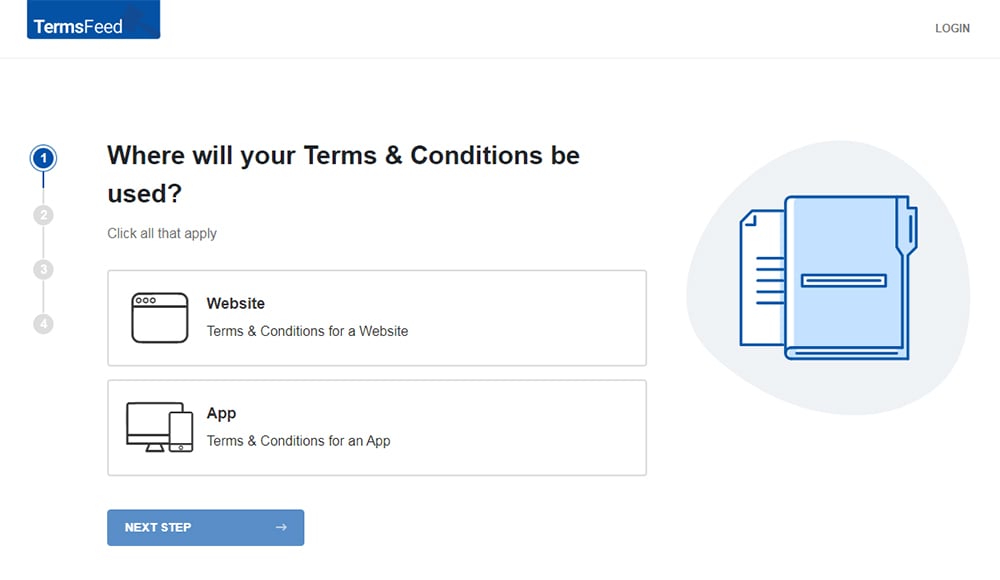
At Step 1, select the Website option or the App option or both.
-
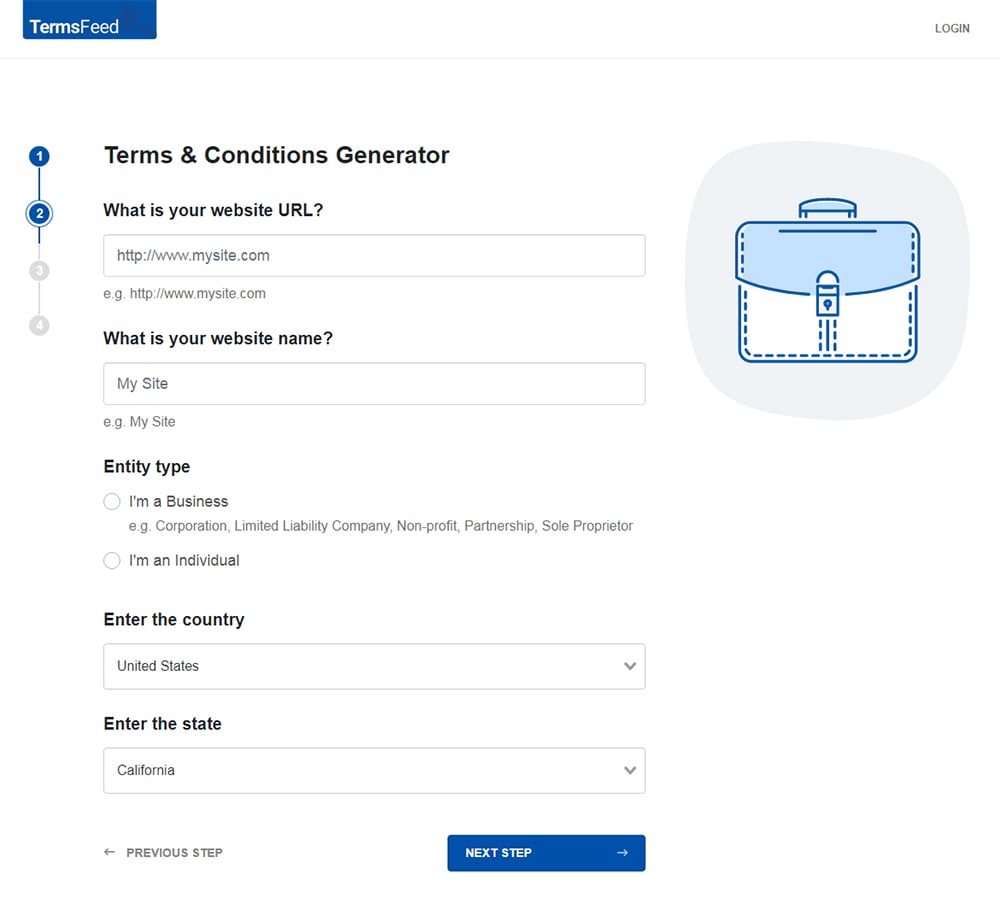
Answer some questions about your website or app.
-
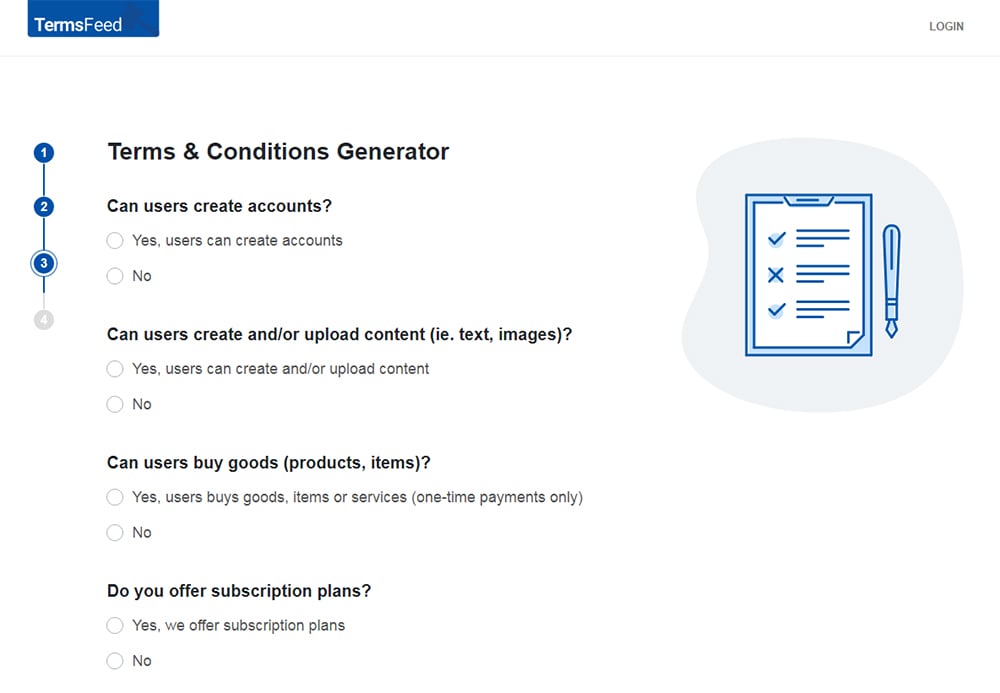
Answer some questions about your business.
-
Enter the email address where you'd like the T&C delivered and click "Generate."
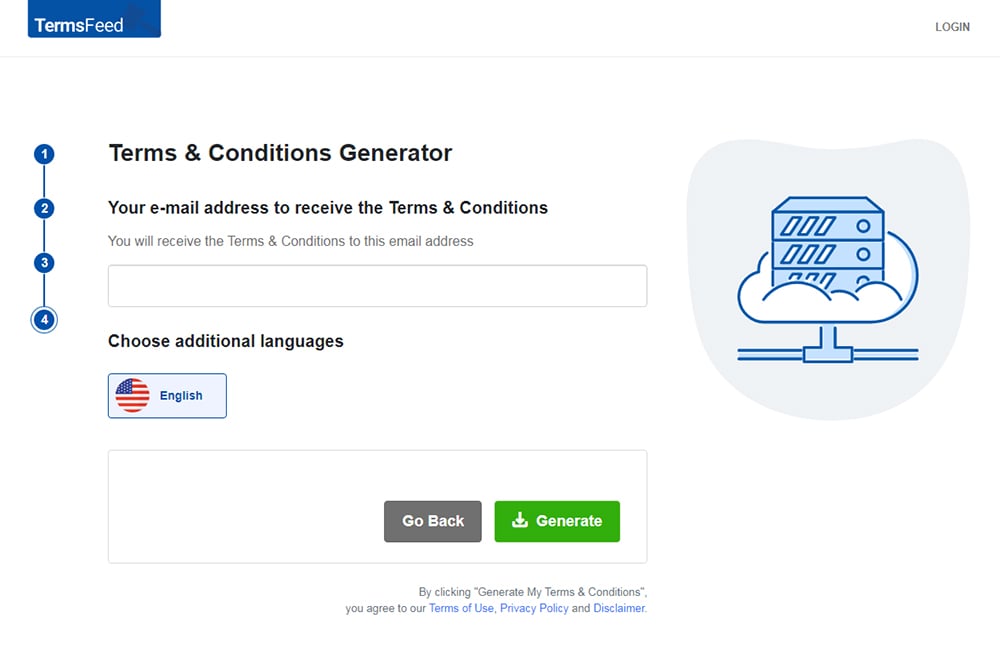
You'll be able to instantly access and download the Terms & Conditions agreement.


- 1. What is a Master Service Agreement (MSA)?
- 2. What is a Terms and Conditions Agreement (T&C)?
- 3. What are the Key Differences Between MSAs and T&Cs?
- 4. When Might You Need Both an MSA and a T&C?
- 5. What are Some Common Clauses in Master Service Agreements?
- 5.1. Independent Contractor Designation
- 5.2. Payment and Invoicing Procedures
- 5.3. Scope of Services and the Ability to Modify Them
- 5.4. Ownership of Intellectual Property
- 5.5. Confidentiality Obligations
- 5.6. Data Security
- 5.7. Indemnification
- 5.8. Limitations of Liability
- 5.9. Dispute Resolution Methods
- 5.10. Insurance Coverage
- 5.11. Termination Rights and Procedures
- 6. What are Some Common Clauses in Terms and Conditions Agreements?
- 6.1. Acceptable and Prohibited Uses of the Service
- 6.2. Account Creation, Security, and Termination
- 6.3. Payment Terms
- 6.4. Disclaimer of Warranties and Limitation of Liability
- 6.5. Governing Law and Jurisdiction for Disputes
- 6.6. Intellectual Property and Copyright
- 6.7. Privacy
- 6.8. Updating the Terms
- 6.9. Contact Information
- 7. How Do You Update and Maintain an MSA and T&C?
- 8. How Do You Obtain Consent for an MSA and T&C?
- 9. Summary
What is a Master Service Agreement (MSA)?
A Master Service Agreement is a legal agreement that's used primarily in business-to-business (B2B) relationships. Instead of a business having to draft a brand-new contract for each project it takes on, an MSA works to establish the general, overarching legal terms between two parties. Then, individual projects or "Statements of Work" (SOWs) can be attached later, each with specific deliverables, timelines, and costs.
Think of an MSA as the "rules of the road" for the entire relationship. Once signed, it governs how the two businesses will interact, regardless of the specific work being done at any given moment. It may include details on payment terms, intellectual property ownership, dispute resolution, warranties, indemnities, and confidentiality.
A well-written MSA helps avoid repeated negotiations, reduces contract drafting time, and provides predictability for long-term collaborations. For example, a marketing agency and a software company might sign an MSA covering confidentiality, non-compete provisions, and liability limits, then issue separate SOWs for each campaign or product launch.
We will get more into the specific clauses and contents of an MSA later in this article, but here's the intro clause of LinkedIn's MSA. Note how it states right away that the MSA will govern each Statement of Work signed by LinkedIn and its suppliers:

What is a Terms and Conditions Agreement (T&C)?
A Terms and Conditions agreement (also referred to as Terms of Service or Terms of Use) is basically a set of rules and requirements that a business imposes on anyone who uses its website, app, or service. You can think of them as literally the terms and conditions of using a site, service, app, etc. They're typically aimed at end users, whether those are consumers or businesses, and are presented before or at the point of use, for example, when finalizing a purchase on an ecommerce website.
T&Cs are used to define acceptable use, explain restrictions, limit liability, and outline how disputes are to be handled. They also often include clauses related to privacy, user conduct, prohibited activities, account suspension or termination, and payment obligations for subscription services.
Unlike an MSA, T&Cs are not negotiated with each user. Instead, they're presented on a "take it or leave it" basis. Consent is often obtained through clickwrap methods, such as requiring a user to check a box saying they agree to the Terms before creating an account. This means the business writes the Terms, and the user either accepts them or is denied access to the service.
We will also get more into specific clauses later in this article, but you can see the difference in the intro sections of the LinkedIn MSA and this intro from Dave Asprey's Terms agreement. The intro states that by using any of the listed websites, making a purchase, or clicking a box to accept the Terms, the user agrees to them. You can see how this is far more general than the MSA language:

What are the Key Differences Between MSAs and T&Cs?
While some of the differences may already be clear to you, let's get into it more. Both MSAs and T&Cs define rules, responsibilities, and legal protections. Both are enforceable contracts if properly drafted and agreed to. And both may contain similar clauses, such as limitations of liability or governing law provisions. While both legal documents serve to protect a business and set legal boundaries, the core differences come down to their context, relationship scope, negotiation, customization, and enforcement.
An MSA is negotiated between two specific parties, often with lawyers on both sides reviewing every clause. The terms are tailored to the relationship, address the specific risks and obligations of each party, and are designed to cover multiple future engagements. Because MSAs are usually used in a B2B context, both sides are presumed to have relatively equal bargaining power, legal assistance, and the opportunity to negotiate terms. Because of this, courts tend to give B2B contracts a high degree of enforceability unless they clearly violate any laws.
T&Cs, on the other hand, are broadly applicable to any user of a product or service and are generally non-negotiable. They're standardized, apply to potentially thousands or millions of users, and are typically offered on a "take it or leave it" basis, especially in business-to-consumer (B2C) situations. This is where consumer protection laws come into play, and where individuals have consumer rights. Even if a consumer clicks "I Agree" on a Terms acceptance interface, clauses that are unfair, deceptive, or unconscionable can be struck down under statutes like the Federal Trade Commission (FTC) Act in the U.S., state-level Unfair and Deceptive Acts and Practices (UDAP) laws, or, in the EU, the Unfair Contract Terms Directive. All of these laws are specifically designed to protect individuals, who generally don't have the expertise or legal resources available to negotiate terms.
Another distinction is that MSAs are usually signed in a formal process - either on paper or via e-signature - before work begins. T&Cs are often accepted digitally and instantaneously, typically without any direct interaction between the parties beyond the user clicking "I Agree."
Another difference is tone and complexity. MSAs tend to be longer, more formal, and be written with more technical legal clauses because they're aimed at sophisticated parties and specific projects. T&Cs, while still legal in nature, often mix formal language with easy to understand language and explanations so that the average consumer can understand them.
Here is a comparison table of the differences between an MSA and a T&C:
| Feature | Master Service Agreement (MSA) | Terms and Conditions (T&C) |
| Primary Purpose | Establishes overarching legal and commercial terms for an ongoing business relationship, usually between two specific parties. | Sets standardized rules for accessing and using a product, service, website, or app. |
| Typical Context | Business-to-Business (B2B) relationships; e.g., supplier agreements, agency contracts, service providers. | Business-to-Consumer (B2C) or Business-to-Many (B2M); e.g., ecommerce sites, SaaS platforms, apps. |
| Negotiation | Negotiated between parties, often with legal teams; terms are tailored to the relationship. | Non-negotiable; presented on a "take-it-or-leave-it" basis to all users. |
| Consent Method | Formal signatures (wet ink, PDF signature, or e-signature platform). | Clickwrap or browsewrap acceptance; e.g., checking an "I Agree" box before proceeding. |
| Structure | Framework agreement supplemented by Statements of Work (SOWs) detailing deliverables, timelines, and pricing. | Standalone document governing general use; may reference Privacy Policy or other policies. |
| Update Process | Amended by mutual agreement; formal change orders or contract amendments required. | Can be updated unilaterally by the business (subject to legal notice/consent requirements in some jurisdictions). |
| Common Clauses | Independent contractor designation, payment terms, IP ownership, confidentiality, indemnification, liability limits, dispute resolution, insurance. | Acceptable/prohibited use, account creation, payment/refund policies, disclaimers, IP rights, privacy, governing law, update rights. |
| Tone & Complexity | Formal, detailed, legal-technical; assumes sophistication of both parties. | Mix of formal and plain-language; designed to be understandable to a general audience. |
| Enforceability Considerations | Governed by contract law principles; heavily reliant on negotiation history and documented consent. | Must comply with consumer protection laws; enforceability can depend on clarity of presentation and consent method. |
When Might You Need Both an MSA and a T&C?
Some business models benefit from having both an MSA and a T&C in place, with each agreement serving a distinct role. This is especially common for companies offering subscription-based software platforms to enterprise clients.
In this setup, the MSA governs the overall business relationship between the service provider and the client. It covers negotiated matters such as pricing structures, service level commitments, timelines, custom integrations, data handling, and confidentiality. The MSA is signed by authorized representatives of both parties and remains the contractual backbone for the entire commercial relationship.
The T&C, on the other hand, applies to the individual end users who actually log in and use the platform. These Terms outline acceptable use policies, prohibited activities, account security requirements, and other operational rules. They are typically presented in a click-to-accept format when users create an account or access the service for the first time.
By keeping the MSA and T&Cs separate, the provider can tailor each agreement to different audiences: the MSA focuses on high-level obligations between the businesses, while the T&Cs handle day-to-day management of the product or service itself.
What are Some Common Clauses in Master Service Agreements?
MSA's are commonly very heavy with clauses that work to establish trust between the businesses involved, minimize any legal risk, and create an efficient framework for repeat business. While every MSA will differ from the next, certain provisions or clauses appear frequently because they establish the legal foundation for the relationship. These commonly used clauses include the following.
Independent Contractor Designation
This clause clarifies that the service provider is not an employee of the client but an independent contractor. That distinction matters for tax purposes, liability, and compliance with labor laws. This clause will typically state that the provider is responsible for their own taxes, benefits, and work methods, and that neither party can bind the other to obligations beyond the scope of the agreement. Without this clarification, misunderstandings could lead to huge misunderstandings, issues, or unexpected legal obligations.
Here's how LinkedIn notes in its MSA that each party is an independent contractor to the agreement, and that no partnership or joint venture is created. It notes that no benefits will be provided, and that the supplier is responsible for its own taxes:

Payment and Invoicing Procedures
This section sets out exactly how and when payment will be made, including invoice submission timelines, accepted payment methods, and any late payment penalties. It may also cover currency, tax responsibilities, and whether related expenses are reimbursable. Clear payment terms help avoid cash flow disputes and keep both parties aligned on financial expectations from the start, which is incredibly important for the nature of the relationship here.
Here's how LinkedIn addresses this in its MSA, noting specific timelines on payment processing. Taxes are also addressed in detail:

It's very common for an MSA to note that services are to be provided as outlined in a separate SOW as agreed to by the parties, and that the MSA and SOW together form the agreement. The separate SOW will include all the specifics about deliverables, payments, and invoicing procedures, while the MSA will include a clause like the one above that references the SOW.
Here's an example from LinkedIn's MSA. It references and links to a general SOW form and notes that together the MSA and the SOW create the agreement for services provided:

If you click the SOW link, there's more detailed and specific information regarding payments and invoicing. Here's the section that covers what the company is to pay and for what service:

Below this, specific instructions are provided for invoicing including when to send one in, and what must be included in it:

While this may seem redundant, it helps solidify the terms, and also leaves room to make easy adjustments to the process in additional SOWs while keeping the original MSA intact.
Scope of Services and the Ability to Modify Them
An MSA will describe the general nature of the services to be provided, often leaving the specifics to be detailed in individual Statements of Work. This section should also outline how scope changes are handled - whether through written amendments, change orders, or mutual agreement - so there's a documented process for adjusting work without triggering disagreements or unauthorized changes in scope from either party.
Remember that MSA's are up for negotiation where a standard T&C usually is not. This is extra evident in the scope of services section of the MSA. Check out how LinkedIn includes this "Changes" clause that notes the parties can agree in writing to changes to the scope of services, fees payable, and the deliverable timeline:

This clause links to a Change Order form that the parties can use to make and agree to any changes:

Ownership of Intellectual Property
When contracted services working under an MSA produce something new, for example a new software code, art designs, or written materials, this clause sets out who owns those new creations. Sometimes the client retains full ownership, while other times the service provider keeps rights but grants the client a license to use the deliverables. Addressing IP ownership upfront is critical to avoid future disputes over who can use or resell the work.
In the clause below, you can see how LinkedIn states that unless otherwise stated in an individual SOW, LinkedIn retains all rights created in any services or deliverables. A license grant is also outlined in the clause:

Confidentiality Obligations
This section ensures that any sensitive or proprietary information shared during the relationship is protected. It defines what counts as confidential, how it can be used, and the steps each party must take to safeguard it. Confidentiality clauses often survive the end of the agreement, meaning they remain in force even after the parties stop working together.
Because a supplier or contracting party will have access to much of the main business's information, confidentiality must be addressed in an MSA. Putting limits on the way a contracting party uses the data is key. You can see below how LinkedIn starts by defining what this means, including personal data, and notes what isn't considered to be confidential:

LinkedIn then limits the use and disclosure of any information that meets the definition it included. The contracting party must only use the confidential information to provide the service or work product, and must not disclose, modify, reverse engineer or otherwise interfere with confidential information:

Data Security
If the services being provided under the MSA involve handling sensitive data, such as personal information, financial records, or proprietary business data, this clause sets out how that data must be protected. It may reference specific regulations like the GDPR or HIPAA, require encryption, or mandate data breach notification procedures. A robust data security clause helps limit the risk of costly data breaches and ensures compliance with privacy laws relevant to the industries involved.
Here's how LinkedIn addresses data security in its MSA with a requirement that the supplier have industry standard security measures in place, a data breach response plan, and that contact information is provided between the two companies:

Indemnification
Indemnification shifts certain risks from one party to the other. For example, if one party's actions cause a third party to sue, the indemnifying party agrees to cover legal costs, damages, or settlements. This section can be heavily negotiated in an MSA, as neither side wants to be on the hook for issues they can't control.
LinkedIn starts its indemnity clause out with a definition of what "claims" means. It then sets out the requirements for the supplier in the event that any claims arise out of the actions of the supplier. This helps make sure LinkedIn isn't going to be held legally liable for anything the supplier does that leads to a lawsuit:

LinkedIn makes it clear what the supplier is to do in the event of a claim, and goes into a lot of detail of what's required, while ultimately retaining the ultimate right of decisionmaking itself. This is a great example of the high level of customizable negotiation that can go into this clause in MSAs:

Limitations of Liability
This clause places a cap on the maximum amount one party can be held responsible for, often limiting it to a fixed sum or the total fees paid under the agreement within a certain period. It may also exclude certain types of damages entirely, such as indirect, incidental, or consequential losses, including lost profits or reputational harm. Because these clauses can significantly shift the risk balance, they are often heavily negotiated, with each side trying to protect its own interests while keeping the deal workable.
LinkedIn's MSA has a relatively short and straightforward clause on this that very fairly makes each party responsible solely for their own issues. This is an easy and fair way to limit liability for each party:

Dispute Resolution Methods
This section dictates how disagreements between the parties will be handled before they escalate into full-blown lawsuits. The clause may be drafted to require mediation first, followed by binding arbitration. It will specify which state's laws apply and where disputes must be resolved. Agreeing on a process in advance can save time, money, and frustration later for both parties.
Here's how LinkedIn clearly sets out what laws and jurisdictions cover the agreement, and where any disputes must be brought:

Insurance Coverage
Many MSAs require one or both parties to maintain certain levels of insurance throughout the term of the agreement. This might include general liability, professional liability, or even cyber liability insurance. The clause that addresses this will often specify required minimum coverage amounts, proof of insurance requirements, and the obligation to notify the other party if coverage changes or lapses. This helps ensure that if something goes wrong, there's a financial safety net in place to cover it.
LinkedIn's clause requires that the supplier have insurance, and maintain a minimum amount of coverage. It also requires any sub-contractors of the supplier to have required insurance as well. Proof of insurance coverage is required:

Termination Rights and Procedures
This clause describes when and how either party can end the agreement, whether with notice, for cause, or without cause. It may also set requirements for wrapping up unfinished work, returning materials, and settling outstanding invoices after a termination by either party. Having a well-structured termination clause goes far in preventing confusion and bad feelings if the relationship ends unexpectedly to one of the parties.
LinkedIn allows itself to terminate the MSA or any associated SOW for any reason by providing a 10 day written notice to the supplier, or immediately if there are certain breaches of the agreement:

The clause goes on to allow either party to terminate the agreement for material breaches, if the breaches aren't cured within 30 calendar days of notice of the breach. Importantly, it's noted that the termination of one particular SOW doesn't terminate the entire MSA. This is something you should include in your MSA to ensure that while the SOW for a certain job may be terminated, all of the protective clauses in your entire MSA will still stay in place:

Helpfully, LinkedIn includes a section of the clause for the effects of termination, or what will happen if termination occurs. It outlines the obligations of both parties in such a case:

You can see how an MSA is filled with very specific clauses between very specific parties, and how the clauses all relate to that individual relationship. Each MSA will be negotiated and tailored for the relationship.
Next let's look at Terms and Conditions agreements and how while they may contain some of the same types of clauses in name, the contents and context do differ.
What are Some Common Clauses in Terms and Conditions Agreements?
In contrast to MSAs, T&Cs have a scope that's typically tailored to user interactions with a website, app, or service rather than negotiated projects between businesses. Anyone can be a party to a T&C just for visiting a website and creating an account there. While many of the clauses look the same in name, the content of them will differ depending on if the clause is in an MSA or a T&C. The focus here is on protecting the business from misuse or abuse, clarifying what the user can and cannot do, and ensuring that the business retains the right to update its policies whenever needed.
Let's look at some of the clauses typically found in most T&Cs.
Acceptable and Prohibited Uses of the Service
To protect the platform and its users, this clause defines what behavior is allowed and what's off-limits when using the site or service. Acceptable use might include normal, lawful interaction with the service, while prohibited activities could range from spamming and hacking attempts to posting illegal or infringing content. By setting these boundaries, the provider can enforce rules consistently and take swift action against abuse.
Here's an example from Dave Asprey's Terms agreement that forbids website visitors from doing things like reproducing, duplicating, or copying the website, or using it in any illegal way:

While you can have an overarching prohibited uses clause that addresses everything, you can also expand it into sections that are relevant for different features or functionality your site or app may have. For example, if you allow user-generated content or have a forum feature, you may want to include a clause that directly addresses acceptable and prohibited uses of these things.
Here's how Dave Asprey addresses a long list of prohibited uses on a forum, including not expecting privacy, not threatening others, not uploading content that contains software or violates copyright, and not engage in defamation:

Account Creation, Security, and Termination
This section lays out the requirements for setting up and maintaining a user account, including providing accurate information and keeping login credentials secure. It often prohibits sharing accounts or using another person's account without permission. The aim here is to protect both the user and the service provider from unauthorized access, fraudulent activity, and potential security breaches.
When and how a user's account or access can be terminated will also be addressed, whether for violating the Terms, inactivity, or at the user's request. It may also outline what happens to any stored data or content upon termination. Setting these rules upfront gives the provider flexibility to manage its service while ensuring users know the consequences of certain actions.
Here's the "Accounts" clause from Dave Asprey's Terms agreement. It states that users agree to provide and maintain accurate and complete information, not use anyone else's information when creating an account, and keep their password secure. It's also noted that accounts can be suspended or terminated for any reason:

Payment Terms
While an MSA's payment terms clause will outline how you pay the other party, in a T&C it's focused more on who pays you. If you charge fees or have an ecommerce component -whether as a one-time payment, recurring subscription, or in-app purchase - this section will spell out how those charges work. It will cover things like billing cycles, accepted payment methods, currency, taxes, and refund policies. Clear payment terms reduce confusion and give users fair notice of their financial obligations.
Here's a clause that notes how payments must be made with a valid credit or debit card, or via one of the methods available on the website. Shipping and tax details are also included:

A separate clause addresses returns, noting the return window timeframe. If you have a Return and Refund Policy, this would be a great place to link it to and refer readers to it for more information:

Disclaimer of Warranties and Limitation of Liability
This clause limits the provider's responsibility for the quality, performance, or suitability of the service. Often phrased as the service being provided "as is" and "as available," it warns users that the provider does not guarantee uninterrupted access, error-free functionality, or specific results. This helps shield the business from unrealistic expectations or claims over issues beyond its control. It's similar to the MSA version, but it's aimed at end users. It may exclude certain categories of damages, like loss of profits or data, and limit total liability to a small, defined amount. This helps make sure that a single user dispute doesn't create a huge financial risk for the business.
You can see in the clause below how most of the language is boilerplate legalese and in all caps. This is a common practice that ensures the clause is legally valid and highly noticeable:

Governing Law and Jurisdiction for Disputes
This clause lets end users know which country's or state's laws will apply to the Terms and where any disputes will be resolved. This is particularly important for online businesses that have customers all over the world, as it avoids the uncertainty of having to defend a case in a far-away jurisdiction.
Here's an example of this type of clause. It can be short and to the point:

Intellectual Property and Copyright
While the MSA version of this clause addresses IP and copyright related to work produced under the MSA, the T&C version of this clause makes clear who owns the intellectual property associated with the site or service (typically, the business), and what rights, if any, are granted to the end users. It may also address how users can use the provider's trademarks, logos, and copyrighted material, as well as how any user-generated content is handled. A strong IP rights clause protects both the platform's assets and the rights of its contributors.
Here's how a simple clause can protect everything from graphics, text, images, audio clips, and even code used. It goes further and notes trademarks, offering guidelines on how users can and cannot use the company's trademarked content:

Privacy
Because you will likely be collecting legally-protected personal information from end users, such as email addresses during account creation, or financial information when a purchase is made, you must address privacy in your T&C. While you'll need a separate Privacy Policy, you can (and should) still include a short clause in your T&C that notes the Privacy Policy and links to it, as seen here:

Updating the Terms
While an MSA may have a change order and room for heavy negotiation when it's being created, a T&C isn't like that. Since it's more one-sided, the business creating the T&C will usually reserve the right to change the Terms as needed. This is important because online services evolve quickly and fast changes may need to be made to keep the document accurate and up to date.
Include a clause that reserves the right to update the Terms as needed. This clause should describe how users will be notified of changes, such as by email or an in-app message, and when changes will take effect. In some jurisdictions, significant updates require renewed user consent before they become binding.
Here's an example of a simple clause that "reserves the right to update, amend, or modify the Terms upon written or electronic notice." It notes that changes take effect immediately:

Contact Information
A contact information clause gives users a clear, reliable way to reach your business with any questions, complaints, or legal notices they may have. It often includes a mailing address, email address, and sometimes a phone number or online contact form, but it doesn't have to include all of these. Providing this information isn't just good customer service. It can also be a legal requirement under certain consumer protection laws.
Here's an example of a short and simple contact information clause that lets users know to send an email to the noted address:

How Do You Update and Maintain an MSA and T&C?
An MSA is usually updated only when a significant change occurs, such as a new regulatory requirement, a change in one party's business operations, or the addition of a new service category. Updates often require intense negotiation and formal amendment with new signatures on a new agreement or amendment.
T&Cs, however, are more dynamic. Businesses may update them regularly and really at any time to reflect new features, legal changes, or policy shifts. For example, you may change your return shipping policy to have users pay for the return costs when until now you've covered it for them. You can simply make this update at any time without any negotiations needed. Just make sure to include a clause explaining how changes will be communicated and when they will take effect. Remember: some jurisdictions require direct notice and renewed consent for substantial changes.
How Do You Obtain Consent for an MSA and T&C?
With an MSA, consent is far more formal. Both parties review, negotiate, and sign the document. It isn't uncommon for legal teams to be involved as well. Signatures could be done via actual physical signature, PDF with digital signatures, or e-signature platforms like DocuSign or Adobe Sign. Because MSAs are tailored to a specific relationship, both sides must explicitly agree before it's binding.
Here's an example of what the consent/signature section of an MSA can look like. You can see how it's quite formal:

For T&Cs, consent is far less complex and usually just a matter of using a clickwrap method. This is commonly done by having an end user clicking something to show agreement, such as checking a box or clicking a button stating "I Agree." A good practice is to link to your Terms agreement when asking for consent as well.
Consider this: in one day of an online shopping binge, an end user may end up agreeing to ten different T&C agreements by checking an "I Agree" checkbox at checkout. This shows how common and casual a T&C is versus an MSA when it comes to consent.
While browsewrap is still often used by businesses, it's not typically legally enforceable and it shouldn't be something you rely on when getting consent. Browsewrap uses a statement placed in a Terms agreement that says something like, "By using the site or service, you are agreeing to our Terms." Landmark legal cases and court decisions have played a big role in shaping how browsewrap and clickwrap agreements are enforced. For example, in the 2002 case of Specht v. Netscape Communications Corp., the court refused to enforce terms where users were not clearly presented with them before downloading software. This sent a warning that hidden or hard-to-find terms may not hold up in court. The 2014 case of Nguyen v. Barnes and Noble Inc. reinforced that browsewrap agreements often fail unless the business can prove that the user had actual or constructive notice of the terms.
On the other hand, courts have generally favored clickwrap agreements, as seen in the 2012 case of Fteja v. Facebook, where users were required to click "Sign Up" next to a notice that doing so indicated agreement to the Terms. Taken together, all of these cases show a consistent trend: the more obvious and affirmative the consent mechanism is, the more likely a court is to find it enforceable.
Here's an example of all that's really needed to obtain consent for a Terms agreement. It has an active consent mechanism (checkbox) for a user to show consent, a link is provided to the full agreement, and the statement next to the checkbox makes it clear that by clicking the box, the user is agreeing to the Terms:

Summary
Master Service Agreements and Terms and Conditions may both be legal agreements with many similar clauses, but they operate in very different arenas.
An MSA is the foundation for an ongoing, negotiated business relationship, especially in the B2B space. It covers the high-level commercial and legal framework that governs multiple projects or transactions with another business over time. Terms and Conditions, by contrast, regulate how individual users interact with a product or service, typically in a standardized, non-negotiable format.
Understanding these differences is essential for protecting your business. Using the wrong type of agreement, or failing to include the correct clauses in your agreement, can leave you exposed to legal disputes and financial risk. While most businesses should have a T&C, not all may need an MSA. If you do need an MSA, it in no way will replace your need for a T&C.
While the clauses may have the same title, such as "Prohibited Activities," keep in mind that the specific content of the clauses will change. This is because, for example, the activities you want to prohibit with an MSA will be far more specific than what you want to prohibit your general website visitors from doing. By keeping in mind the nature of each agreement and who the actual parties are to them, it will help make it more clear what content should be included in each.

The first step to compliance: A Privacy Policy.
Stay compliant with our agreements, policies, and consent banners — everything you need, all in one place.


